Powder Coating for Outdoor Furniture
A powder coat is only as good as the powder chemistry, the surface preparation and the film build behind it. Here is what to specify for steel furniture that lives outdoors.
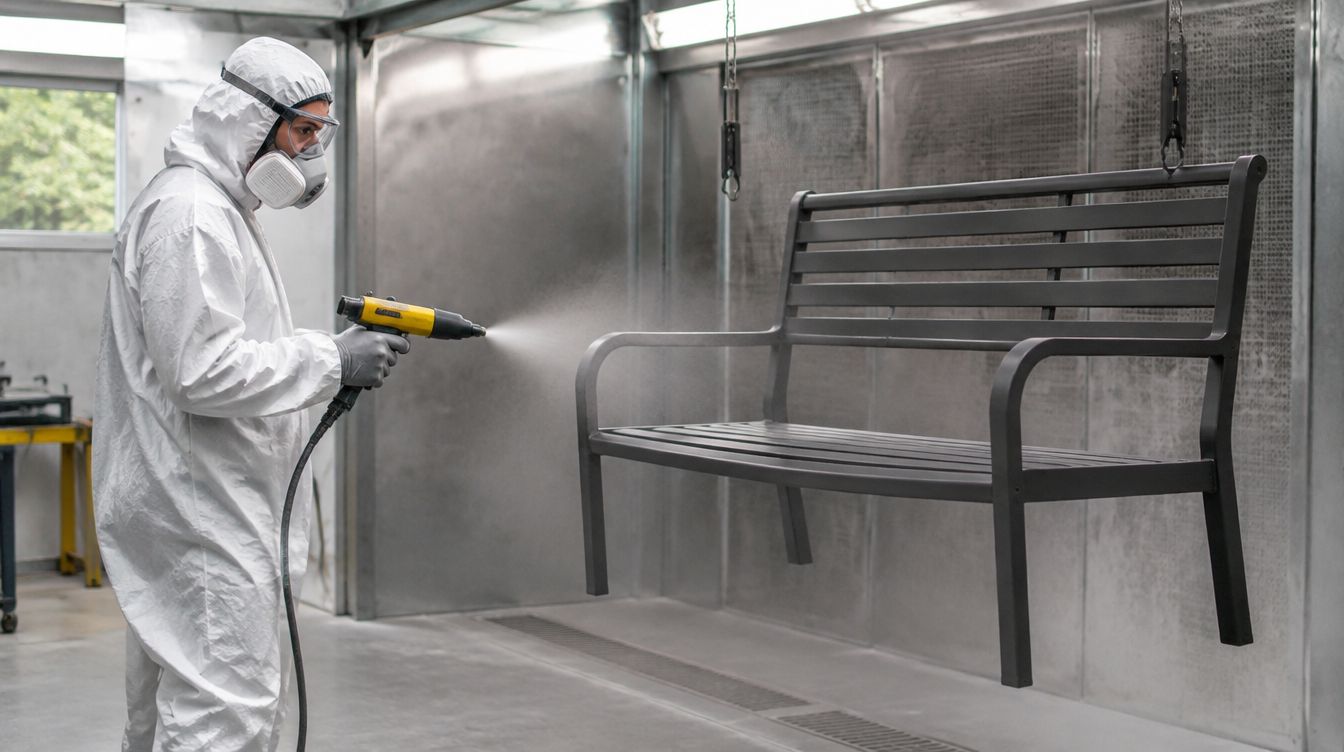
Powder coating is the standard finish for steel site furniture. It is tough, available in almost any color and free of the solvents used in liquid paint. But not all powder coats are equal. Two benches in the same color can look identical on delivery and very different after five summers, depending on the powder used and how the steel was prepared.
This guide explains what goes into a durable exterior powder coat and what to ask a supplier.
How powder coating works
Powder coating uses a dry powder of resin, pigment and additives. The powder is sprayed through an electrostatic gun that gives it a charge, so it clings to the grounded steel part. The part then goes into an oven, where the powder melts, flows into a continuous film and cures through a chemical reaction. Typical cure schedules are in the range of 350 to 400 °F (about 180 to 200 °C) for 10 to 20 minutes at metal temperature, depending on the powder.
The result is a thicker, more even coating than most liquid paints, with good edge coverage and strong resistance to chipping.
Choose the right powder chemistry
The resin system decides how the coating weathers in sunlight. For outdoor furniture, this is the most important choice.
- Epoxy. Excellent adhesion and chemical resistance, but it chalks and fades quickly in UV. Use epoxy only as a primer under an exterior topcoat, never as the final outdoor finish.
- Standard exterior polyester. The common choice for outdoor products. TGIC polyesters and TGIC-free versions (often called HAA or Primid types) both perform well outdoors.
- Super-durable polyester. Formulated to hold color and gloss noticeably longer in strong sun. Worth specifying for bright colors, high-UV sites and products that should look new for longer.
- Fluoropolymer and other architectural grades. Highest weathering performance, typically used on architectural aluminum. Higher cost and fewer colors.
- Hybrid (epoxy-polyester). Designed for indoor use. Not suitable outdoors.
When a quote just says "powder coated", ask for the product name or data sheet of the powder. That one question separates suppliers using exterior grades from those using interior powders.
Pretreatment: where most failures start
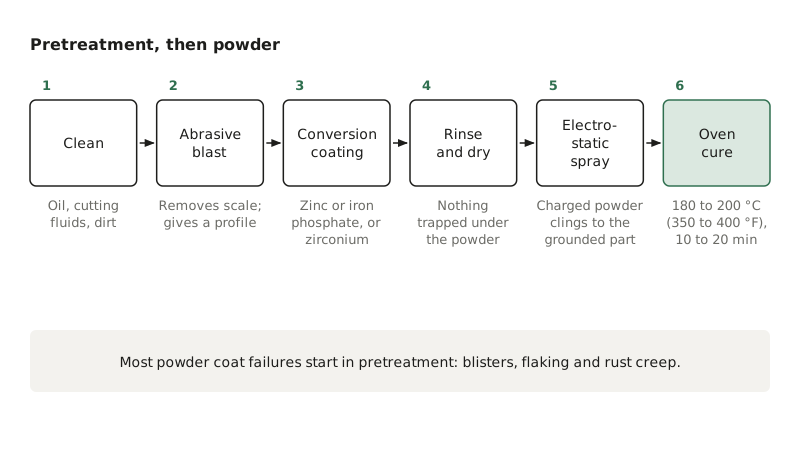
Powder coat fails mainly by losing adhesion, and adhesion depends on surface preparation. A good outdoor process for steel includes:
- Cleaning to remove oil, cutting fluids and shop dirt.
- Mechanical preparation such as abrasive blasting to remove mill scale and rust and give the surface a profile the coating can grip.
- Chemical conversion coating such as zinc phosphate, iron phosphate or a zirconium-based treatment, which improves adhesion and slows corrosion creep under the coating.
- Rinsing and drying so no contaminants or moisture are trapped under the powder.
Skipping steps here shows up later as blisters, flaking, and rust spreading under the paint from every scratch.
Powder coating over galvanized steel
For the longest life outdoors, powder coat goes over hot-dip galvanizing. This duplex system gives a colored finish with zinc protection underneath. It needs specific preparation:
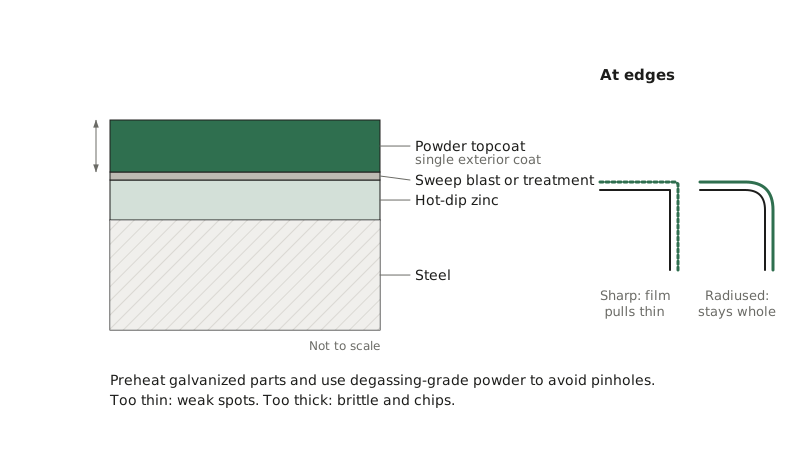
- The zinc surface is cleaned and usually given a light sweep blast or chemical treatment to create a profile without removing too much zinc.
- Galvanized parts can release trapped gases when heated, which leaves pinholes and bubbles in the powder. Preheating the part before coating, and using degassing-grade powders, prevents this.
- A zinc-compatible primer may be used in very aggressive environments.
ASTM D7803 sets out a practice for preparing galvanized steel for powder coating, and it is a useful reference for specifications. Read more about the zinc layer in our guide to hot-dip galvanizing.
Film thickness and edges
A single exterior topcoat is commonly applied at about 2.5 to 4 mils (60 to 100 µm), following the powder manufacturer's recommendation. Two-coat systems with a primer are thicker overall.
- Too thin leaves weak spots, poor hiding and early corrosion, especially on edges.
- Too thick can become brittle, chip on impact and show an orange peel texture.
- Sharp edges pull the powder thin as it melts. Good fabricators break or radius edges before coating so the film stays continuous.
Ask whether the coater measures film thickness and records it. A simple dry film thickness gauge reading on a few points of each batch is a basic quality check.
Gloss, texture and everyday wear
Finish choice affects how furniture looks after a few years of use.
- Fine textured finishes hide small scratches, scuffs from bike locks and minor surface imperfections. They are a good default for racks and benches.
- Smooth high-gloss finishes look crisp at first but show every scratch and are slippery when wet on seating surfaces.
- Matte and satin finishes reduce glare and suit most architectural settings.
On high-contact surfaces such as the top of a bike rack or the seat of a bench, some wear is unavoidable. A textured finish in a mid-tone color makes that wear far less visible.
Touch-up and repair
Every coated product eventually gets a scratch. Fast, correct touch-up keeps rust from starting.
- Clean the area and remove any loose coating and rust.
- Lightly sand the edges of the damage so the repair blends in.
- Where bare steel is exposed, apply a zinc-rich primer first.
- Apply touch-up paint matched to the original color code, in thin coats.
Liquid touch-up paint will not match the gloss and texture of a powder coat exactly, but it protects the steel. Keep a can of matched touch-up paint with your maintenance supplies, and record the color code and powder name for each product.
Frequently asked questions
How long should a powder coat last outdoors?
That depends on the powder, the preparation, the climate and the color. A well-applied exterior polyester over proper pretreatment will typically last many years before needing more than touch-ups. Expect gradual gloss loss and some fading, which is faster in strong sun and with bright colors.
Is salt spray testing a good way to compare coatings?
Salt spray testing such as ASTM B117 is widely quoted, but it does not reproduce real outdoor exposure well. It is useful as a basic quality check, not as a prediction of service life. Ask also about the pretreatment, powder grade and any real-world performance history.
Can old furniture be recoated?
Yes. The old coating is stripped by blasting, burn-off or chemical methods, the steel is pretreated again and a new powder is applied. It is often worthwhile for heavy steel pieces in good structural condition.