Shade for Playgrounds
Playground shade protects children from sun exposure and keeps slides, decks and surfacing cool enough to use. Here is what to shade first and how to do it without creating new hazards.
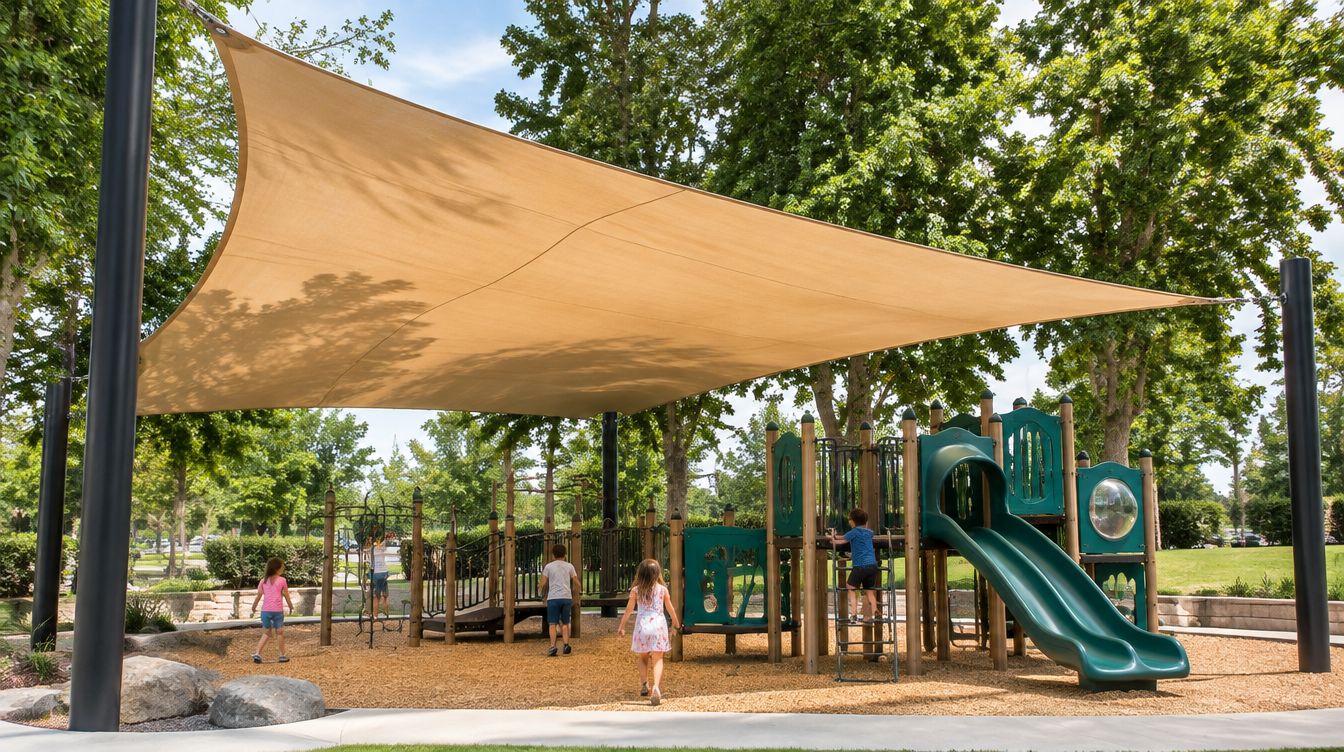
On a sunny summer afternoon, an unshaded playground can empty out. Metal slides and steps get hot, dark rubber surfacing radiates heat, and parents move their children somewhere cooler. Children's skin also burns easily, and sunburns in childhood are linked to a higher risk of skin cancer later in life.
Shade fixes both problems, but a playground is a demanding place to build. Structures must stay out of the zones children fall into, must not be climbable, and must survive years of hard use. This guide covers how to plan playground shade that helps without adding risk.
Why playground surfaces matter
Surfaces in direct sun can become hot enough to burn skin, and young children may not pull away quickly. The risk is highest on:
- Metal slides, decks and handrails, particularly bare or dark finished steel.
- Dark poured-in-place rubber and synthetic turf, which absorb heat and stay hot into the evening.
- Dark plastic components, such as black or dark green slides and panels.
Shade is the most effective fix, because it keeps the sun off the surface in the first place. Lighter colored equipment and surfacing help too, and a warning sign for hot surfaces is a sensible addition where shade cannot reach.
What to shade first
Few budgets can cover a whole playground, so prioritize.
- Slides and the decks that feed them. Slides are the classic burn risk, and a slide facing the afternoon sun is the worst case. Where you are choosing slide orientation on a new playground, a north-facing slide stays coolest.
- Areas for the youngest children. Toddler play zones and sand play are used by children who spend long periods in one spot and are least able to manage heat.
- Caregiver seating. Shaded benches with a clear view of the play area keep families there longer. A backless bench lets adults face either way to watch children.
- Gathering and waiting spots, such as the area beside a splash pad or the line for a popular piece of equipment.
Swings are hard to shade well because the structure would need to be very large and high to stay clear of the swing path. They are often better left in the open, or shaded by trees planted outside their use zone.
Keep shade out of use zones
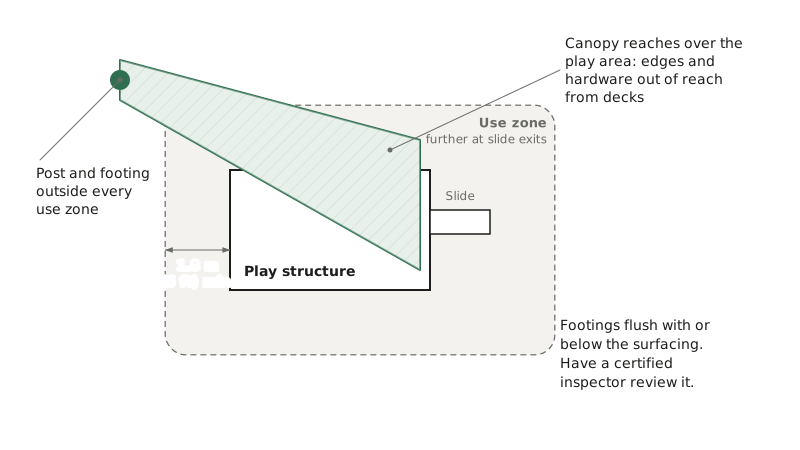
Playground safety standards define a use zone around each piece of equipment: the area children may fall into or move through while using it. In the United States, the main references are ASTM F1487 and the CPSC Public Playground Safety Handbook. Use zones commonly extend at least 6 ft (1.8 m) from equipment, and further in front of slides and around swings.
- Keep posts, footings, guy wires and anchors out of all use zones.
- Do not let canopy edges, fabric or hardware sit where a child on a deck or climber could reach them.
- Avoid protrusions, sharp edges and gaps that could catch clothing or trap fingers, heads or limbs.
- Make footings flush with the finished grade or below the surfacing so they do not create a trip hazard or a hard landing point.
- Ask a certified playground safety inspector to review the layout before you order the structure.
Cantilever structures are popular in playgrounds because their posts can stand well outside the play area while the canopy reaches over it.
Prevent climbing
Children will climb anything that looks climbable. Shade posts should be smooth, without footholds, bracing or ledges at low heights. Canopies should be high enough that children cannot reach them from the top of play equipment. If a structure has diagonal bracing or a ladder-like frame, keep it well out of reach or choose a different design.
Sun protection, not sun proofing
Shade fabric reduces UV exposure substantially but does not block it all. Some UV passes through the fabric, and more reflects off nearby surfaces such as concrete, light paving and water. Shade works best as part of a wider sun safety approach that includes hats, sunscreen and limiting time in direct sun around midday.
- Check the rated UV block for the specific fabric and color you choose.
- Extend shade past the edge of the equipment on the sun side so the shadow still covers it in the afternoon.
- Combine structures with tree planting outside use zones for long-term, cooler shade.
- Use lighter colored surfacing under and around shaded areas to reduce reflected heat.
Seasons, maintenance and vandalism
In snow regions, fabric playground shades are typically taken down each fall before snow, then reinstalled in spring. In warmer states they may stay up year round, but should still be inspected after storms. Plan who does that work, where fabric is stored and how it is inspected. Include fabric removal in the maintenance contract, not as an afterthought.
- Inspect fabric for tears, loose stitching and loss of tension at installation and regularly through the season.
- Check fasteners and connection hardware for tightness and missing caps.
- Look for damage at the post base from mowers and snow equipment.
- Remove fabric ahead of forecast severe winds if the manufacturer recommends it.
Fabric is the most vulnerable part to vandalism. Higher canopies are harder to reach and cut. Good sightlines from the street and surrounding buildings help too.
Frequently asked questions
How high should a playground shade canopy be?
High enough to stay out of reach from the tallest platform or climbing point nearby, with margin. Exact clearances depend on the equipment and the applicable standard, so have the layout reviewed by a certified inspector and the structure designed by the manufacturer and an engineer.
Can a shade structure be added to an existing playground?
Usually, yes. The main challenge is finding post locations outside every use zone that still put shadow on the equipment, and digging footings without damaging existing surfacing or drainage. Cantilever designs give the most flexibility for retrofits.
Is shade fabric fire rated?
Many commercial shade fabrics are tested for flame resistance. In the US, NFPA 701 is a common test. Some jurisdictions require a rating for public structures, so ask for the test certificate and confirm what your building department needs.