Bike Parking for Schools
School bike parking has to handle a big morning rush, small bikes, scooters and young users. Here is how to size, place and run it so students actually ride.
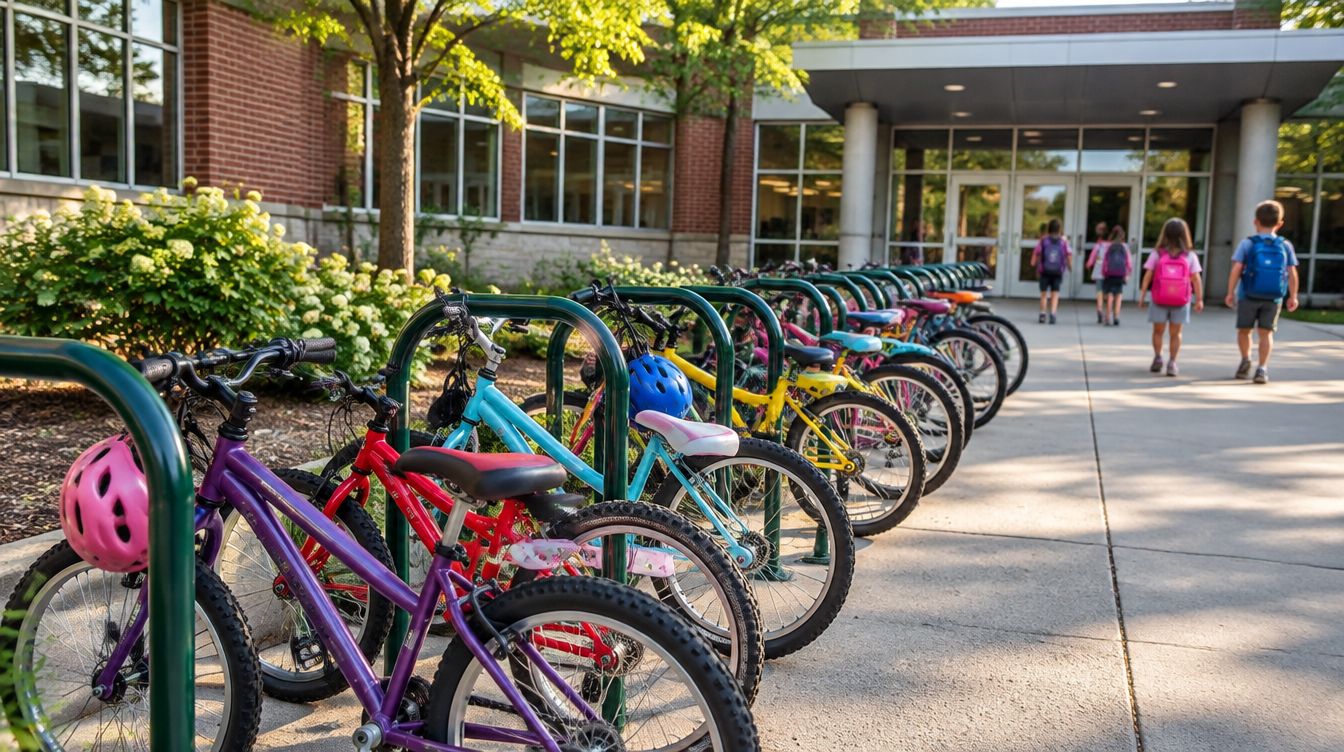
Schools are one of the best places to build a cycling habit, and one of the hardest places to get bike parking right. Nearly every student arrives in the same fifteen minutes. Bikes range from small children's bikes with training wheels to teenagers' full-size bikes and e-bikes. Many young riders have never locked a bike to a rack before. Add scooters, a tight budget and a site already crowded with buses and drop-off traffic, and it is easy to see why so many school racks are either overflowing or empty. This guide covers what works.
Size for the riders you want, not just today's
Count the bikes on a typical fair-weather day in spring or early fall, including bikes locked to fences. Then ask whether parking is holding numbers down. Students and parents often say they would ride if parking were safer or more convenient.
- Check whether your province, school board or municipality has a bike parking requirement for schools. Many zoning rules set one for new schools and additions.
- If the school runs or plans an active school travel program, size parking for the program's target, not current numbers.
- Expect demand to swing with the seasons and with events like bike-to-school days. Rail-mounted racks are an easy way to add temporary capacity.
- Count scooters separately. They need somewhere to go too, and a scooter left in a bike space takes a whole space.
Choose racks that suit children
The rack basics still apply: support the bike at two points and allow a U-lock around the frame. For schools, add a few more considerations:
- Height and contact range. Small bikes may only touch the top of a tall rack. Arc racks and inverted-U racks with a lower crossbar give contact points for a wide range of frame sizes.
- Intuitive shape. Young users park however they can. A rack that only works one way will be used every other way. Separate loops or arcs are more forgiving than wave racks.
- Durability. Racks get climbed, sat on and swung on. Choose heavy-wall steel pipe, a galvanized finish under any powder coat, and tamper-resistant fasteners.
- School colours. A rack finished in school colours, or a custom design, signals that cycling is welcome. Our Arc Rack is popular at elementary schools for this reason.
Place parking where it is safe and supervised
Location matters more at a school than almost anywhere else, because it affects both safety on the way in and theft during the day.
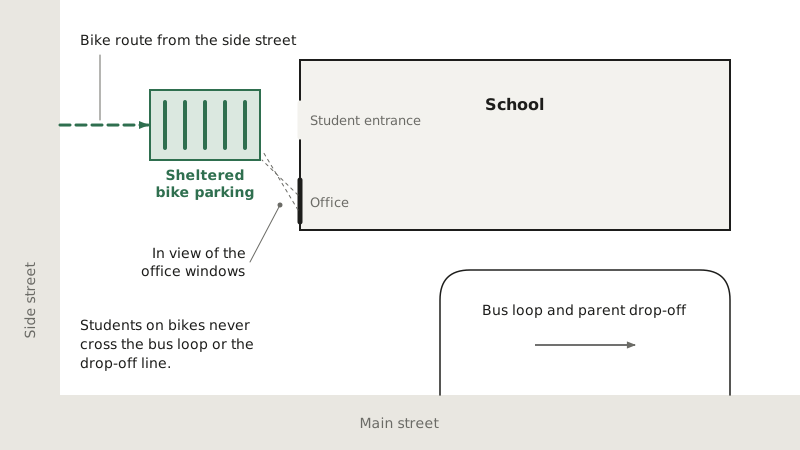
- Separate bikes from cars and buses. Route students on bikes to the parking area without crossing the bus loop or the parent drop-off line. Ideally, the bike route enters from a different side of the site.
- Keep it visible. Place parking where staff can see it: near the main entrance, in view of the office windows, or next to a supervised yard. Hidden corners behind portables invite vandalism and theft.
- Near the entrance students use. Students should not have to walk their bikes across the whole yard.
- Give it shelter. Bikes sit outside for six or seven hours. A roof keeps seats dry and makes riding in shoulder seasons more appealing. A shade structure can do double duty for outdoor learning in summer.
- Allow room for the rush. Wide aisles let dozens of students park and leave at once. Plan aisles noticeably wider than the minimum used elsewhere.
Secure areas and fencing
Many schools enclose bike parking in a fenced area that is locked during the school day and opened at arrival and dismissal. This works well where theft or vandalism is a concern, especially at secondary schools where bikes are more valuable. Things to plan for:
- A gate wide enough for two bikes to pass at once, with a lock the custodian or a staff member opens on schedule.
- Racks inside the enclosure, so each bike is still locked individually.
- A clear plan for students who need their bike outside normal hours, such as for after-school activities.
- Sightlines through the fence, so supervision still works.
Teach and manage the parking
Hardware is only half the job. A little effort from the school makes the parking far more useful:
- Show students how to lock a bike properly, with a U-lock through the frame and a wheel, during a bike safety day.
- Post a simple sign with a picture of a correctly parked bike.
- Clear out abandoned bikes at the end of each school year, after giving notice.
- Keep the area cleared of snow and leaves, or students will stop using it.
- Ask the parent council or student council to help count bikes each season. It builds support for expanding parking.
Accessibility and design details
Bike parking must not block accessible routes to entrances, play areas or portables. Bikes stick out well past the rack, so check the clear width from the end of a parked bike. Follow CSA B651, your provincial accessibility rules and the school board's design standards. Some students ride adaptive bikes or tricycles. Include at least a couple of larger spaces at the end of a row for them.
Buying for a school
School purchases often go through board procurement rules or a cooperative purchasing group, and large orders may need a tender. Ask early so the order lands before the season starts. Our standard racks ship in about two weeks, so ordering in late winter means racks are in the ground well before the spring riding season.
Frequently asked questions
How many bike racks does a school need?
Start with any local requirement, then count current bikes and add room for growth. Schools with active travel programs often see bike numbers rise once good parking is in place, so a generous margin is wise.
Should school bike parking be fenced?
It depends on theft and vandalism risk and on supervision. Elementary schools with racks in view of the office often do without. Secondary schools with more valuable bikes often benefit from a fenced area locked during the day.
Where should scooters go?
Give them their own spot, such as a scooter rack or a small area beside the bike racks. Otherwise scooters take up bike spaces or get left in walkways.