Shade Fabric Guide
The fabric decides how a shade structure feels, how it handles weather and how long it lasts. Compare knitted HDPE and coated PVC, then plan for colour, care and winter.
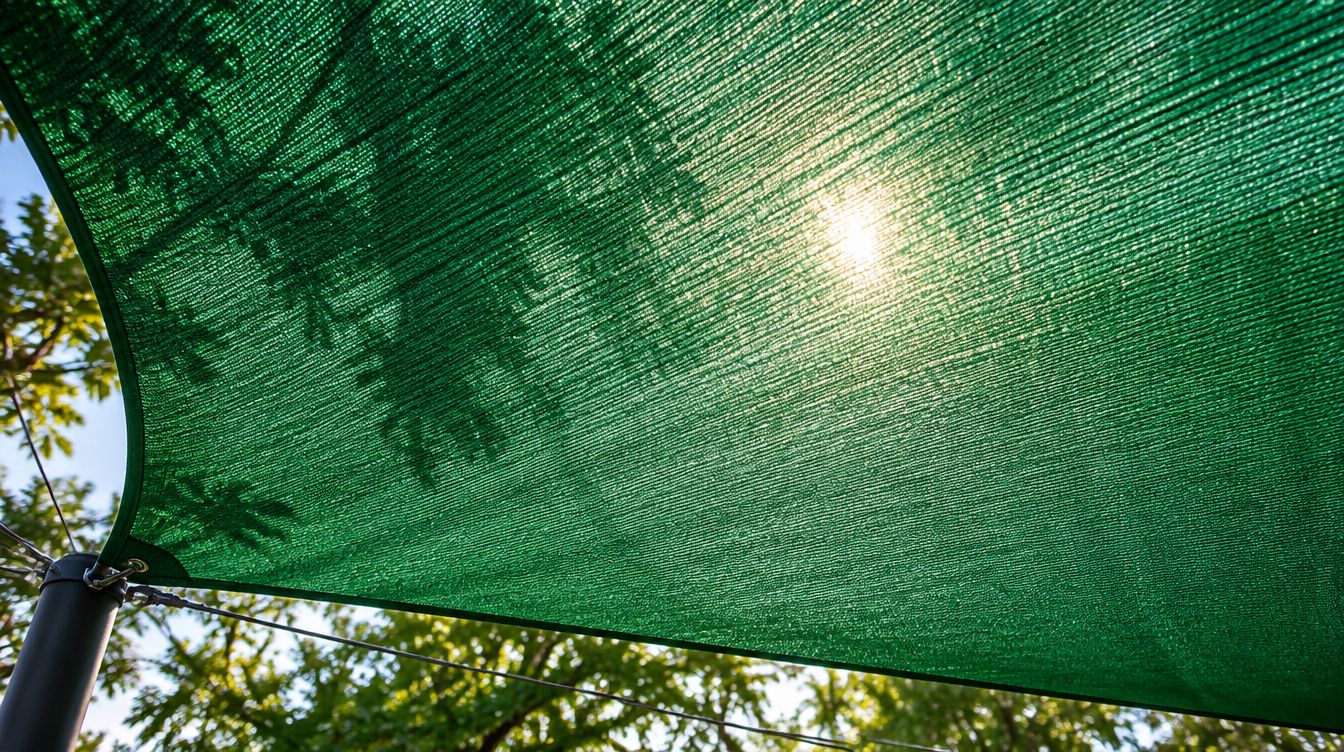
The frame of a shade structure can last for decades. The fabric is the part that wears, fades and eventually gets replaced. It also has a big effect on what it is like to stand underneath: how bright, how cool and whether it keeps the rain off. Choosing the right fabric up front avoids an expensive change later.
The two main fabric families
Most commercial shade structures use one of two materials.
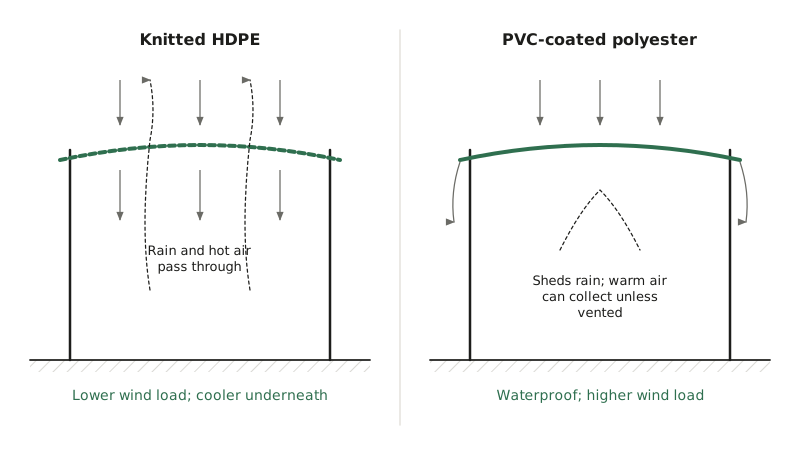
Knitted high-density polyethylene (HDPE) is the open-weave shade cloth seen over most playgrounds and parking areas. It is knitted rather than woven, so it resists unravelling when cut or snagged. It is UV stabilized, light and breathable.
PVC-coated polyester is a woven polyester base coated on both sides with PVC. It is waterproof and looks more like a tent or awning. Higher-grade versions have a lacquer or fluoropolymer topcoat that resists dirt pickup.
| Knitted HDPE | PVC-coated polyester | |
|---|---|---|
| Rain | Lets most rain through | Waterproof; sheds rain |
| Heat underneath | Hot air escapes through the weave | Can trap warm air unless well vented |
| Wind load | Lower, because air passes through | Higher; structure must be designed for it |
| Snow | Not designed to carry snow | Not designed to carry snow unless engineered for it |
| Weight and handling | Light, easy to remove and store | Heavier, stiffer to fold |
| Typical use | Playgrounds, seating, parking | Patios, stages, rain shelter |
For most outdoor seating and play areas, HDPE is the practical default: it is cooler underneath, puts less load on the frame and is easy to take down for winter. Choose PVC when rain protection is the main goal, and make sure the structure is designed for the higher loads and the drainage that comes with a solid membrane.
Architectural membranes such as PTFE-coated fibreglass are used on large permanent tensile roofs. They are a specialist product and outside the scope of most park and site furniture projects.
UV block, shade and colour
Shade fabric is rated by how much UV and light it blocks. The figures depend on the knit density and, importantly, on the colour. The same fabric line often blocks noticeably different amounts of UV in different colours.
- Darker colours generally block more UV and visible light and make the space underneath feel shadier.
- Lighter colours let more light through, feel brighter and may block less UV. The fabric itself stays cooler to the touch.
- Bright colours such as reds and yellows are popular for playgrounds but can show fading sooner than darker, more neutral shades.
Ask for the published UV block figure for the exact colour you plan to use. Where sun protection is the priority, such as over a toddler play area, favour a colour with a high rating over the one that best matches the brand.
Lifespan and warranty
Fabric life depends on UV intensity, wind, tension, abrasion and how it is stored. Commercial HDPE and PVC fabrics commonly carry warranties of around ten years against UV degradation, but terms vary widely, so read the details. Look for:
- Whether the warranty covers the fabric, the thread and the hardware, or only the fabric.
- Whether it is pro-rated, and what it excludes, such as wind events above a set speed, snow, vandalism and improper storage.
- The thread used for seams. PTFE thread lasts far longer in sunlight than polyester thread. With cheaper thread, seams can fail years before the fabric does.
- Reinforcement at corners and edges, where tension is concentrated.
Winter removal and storage
In most of Canada, fabric canopies are designed to come down before snow. Snow on HDPE does not fall through. It sits on the fabric, and the weight can tear it or damage the frame. Even PVC canopies are rarely designed to carry a full snow load.
- Pick a removal date before the first significant snowfall, and a reinstall date after the last.
- Remove fabric on a dry day, or dry it fully before storage to prevent mildew.
- Brush off leaves and dirt, and note any damage for repair over winter.
- Roll rather than fold sharply, and label each piece with its location.
- Store indoors, off the floor, away from rodents and sharp objects.
- Keep the tensioning hardware with the fabric, and replace worn parts before reinstalling.
In warm climates where fabric stays up all year, inspect after major storms and consider removal ahead of forecast hurricane-strength winds if the manufacturer recommends it.
Tension, cleaning and repairs
Fabric relaxes over time, especially in its first season. Slack fabric flaps in the wind, wears at the edges and can pond water. Check tension after installation and again a few weeks later, and adjust as the manufacturer directs.
- Cleaning. Use a soft brush, water and a mild detergent. Avoid harsh solvents, abrasive pads and high-pressure washing close to the fabric.
- Small tears. Repair promptly with the manufacturer's patch kit. Small tears grow quickly once wind gets into them.
- Bird droppings and tree sap. Clean them off early; left in place they can stain or degrade some coatings.
- Replacement. Order replacement fabric from the original supplier or with the frame dimensions documented, since shade fabrics are cut and finished to suit each frame.
Fire rating and specification
Many jurisdictions require shade fabric on public structures to meet a flame resistance test. In Canada, CAN/ULC-S109 is the usual test. Ask your building department what applies and request the test certificate from the supplier.
When writing a specification, list the fabric type, the colour and its UV block, the flame test, the thread type, the warranty terms and the winter removal plan. That way, quotes are comparable and the structure that arrives matches the one that was designed. Our cantilever shade can be supplied with fabric in a range of colours to suit these choices.
Frequently asked questions
Does shade fabric block all UV?
No. Even high-rated fabrics let some UV through, and UV also reflects off surrounding surfaces such as concrete and water. Shade greatly reduces exposure but works best alongside hats, sunscreen and sensible timing.
Can we leave HDPE fabric up through a mild winter?
Only if the structure is designed and warrantied for it and snowfall is genuinely rare. One heavy, wet snowfall can damage a canopy. If in doubt, take it down.
How do I know when fabric needs replacing?
Signs include brittleness, loss of colour, thin or shiny worn spots, fraying at corners, and seams that are coming apart. If the fabric tears easily when tugged at a damaged spot, it is near the end of its life.