Site Furniture Maintenance Schedule
A season-by-season checklist for inspecting, cleaning and repairing benches, racks, receptacles, bollards, planters and shade structures, plus how to record what you find.
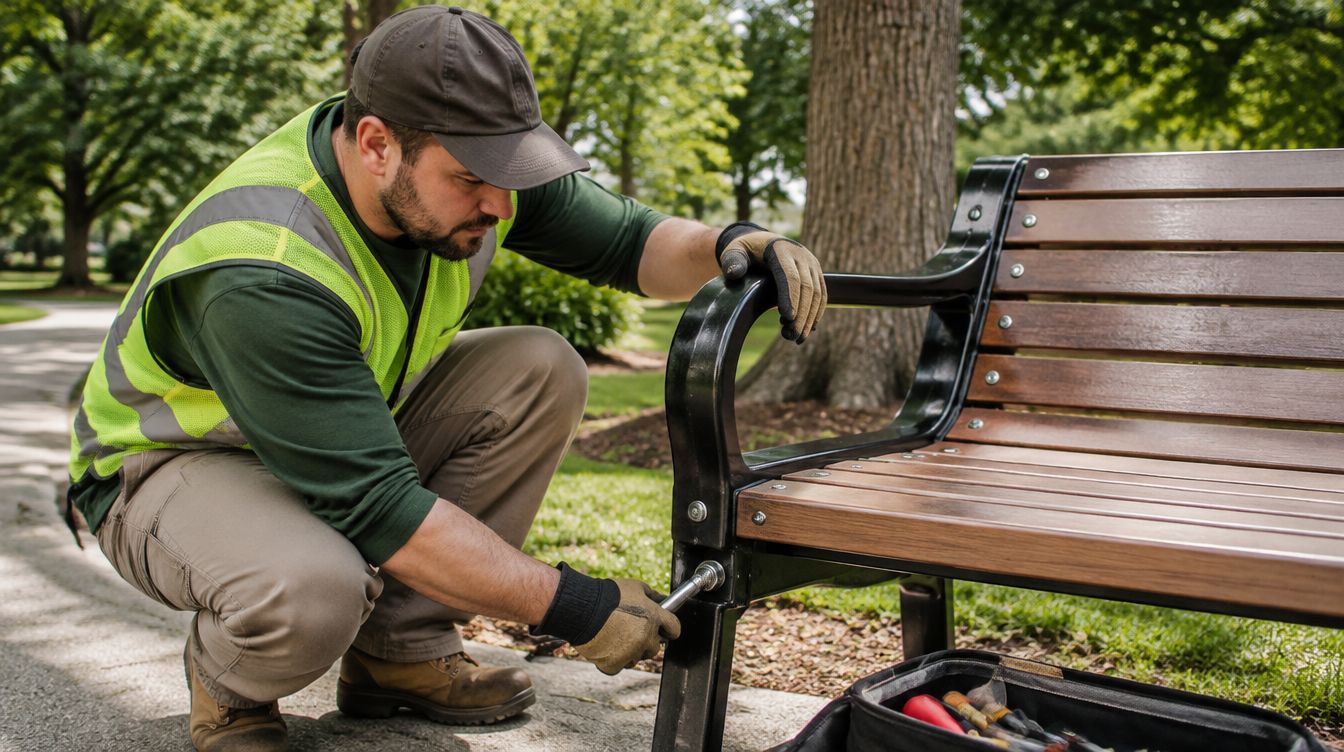
Outdoor furniture rarely fails all at once. A loose anchor becomes a wobbly bench, a chip becomes a rust streak, a cracked slat becomes a splinter complaint. A simple, regular routine catches these small problems while they are cheap to fix. This guide gives a practical schedule you can adapt to your site, whether you look after one plaza or several hundred pieces across a city.
Set up the basics first
A schedule only works if crews know what they are responsible for and can record what they find. Before the first round:
- Build an inventory. Give every piece an ID, a location and a model. A spreadsheet works, and a GIS layer or asset management system is better for large sites.
- Collect the documents. Keep product data, finish colour codes, warranty terms and installation details in one place.
- Stock a repair kit. Touch-up paint in each colour, spare tamper-resistant fasteners and the bits to drive them, a few spare slats, liners and a graffiti remover suited to your finishes.
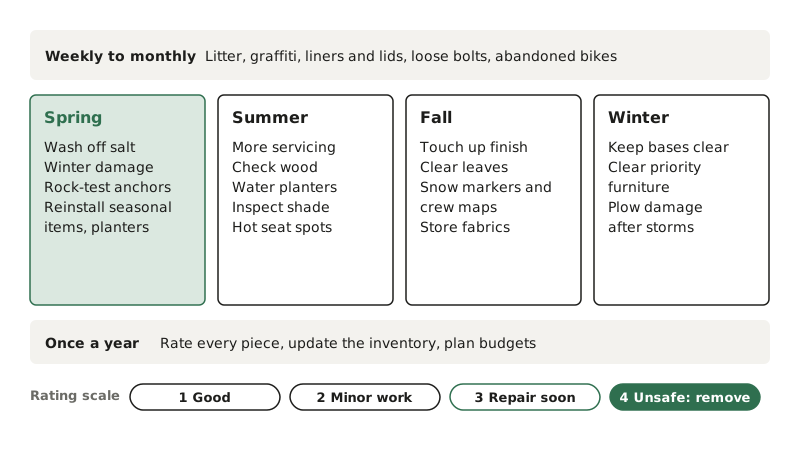
- Agree a rating scale. For example: 1 is good, 2 needs minor work, 3 needs repair soon, 4 is unsafe and must be taken out of service.
Routine checks: weekly to monthly
These are quick visual checks, often done by the same crews who empty receptacles or clean the site.
- Remove litter, gum and stickers.
- Look for graffiti and remove it quickly. Fast removal discourages repeat tagging.
- Check receptacles for damaged liners, broken lids and doors that no longer latch.
- Look for obvious damage: bent tubes, missing slats, loose or missing bolts.
- Check bike racks for abandoned bikes and cut locks. Tag abandoned bikes and remove them after the notice period in your policy, so spaces stay available.
- Report anything rated 3 or 4 for follow-up. Tape off or remove anything unsafe right away.
Busy downtown sites may need weekly checks. Quiet parks may need only monthly visits.
Spring
In most of Canada, and anywhere roads and walks are salted, spring is the most important maintenance season.
- Wash everything with fresh water. Remove salt, sand and grime, especially at bases, undersides and joints. Use a mild detergent and a soft brush. Avoid harsh pressure washing on wood and on chipped coatings.
- Inspect for winter damage. Look for plow strikes, bent bollards, lifted base plates and cracked concrete around footings.
- Check anchors. Try to rock each piece by hand. Tighten loose anchors and replace any that spin in the hole.
- Reinstall seasonal items. Put back removable bollards, café sets, seasonal planters and shade fabrics that were stored for winter.
- Prepare planters. Clear drains, top up soil and replace winter-damaged plants.
Summer
- Increase receptacle servicing where park and patio use rises. Watch for overflow and adjust pickup frequency.
- Check wood surfaces for splinters, raised grain and cracks. Sand rough spots lightly. If you keep wood oiled, apply the yearly coat in dry weather.
- Water planters on a regular schedule. Large planters still dry out quickly in heat and wind.
- Inspect shade structures. Look at fabric tension, wear at attachment points and the condition of cables and hardware.
- Look at surface temperatures. Dark metal seating in full sun can get uncomfortably hot. Note locations where shade or a different seat material would help in future.
Fall
- Touch up the finish. Clean, lightly sand and touch up chips and scratches so bare metal is not exposed to winter salt. Use touch-up paint matched to the original colour code.
- Clear leaves from receptacles, planter drains and the gaps between slats.
- Prepare for snow. Install snow markers on low items, remove furniture from snow storage areas, and share a map of furniture locations with snow clearing crews.
- Take down seasonal items. Remove shade fabrics that are not designed for snow loads, and store café sets and removable pieces.
- Service locks and removable bollards. Clean and lubricate locks, sleeves and covers so they work in freezing weather.
Winter
- Keep snow and slush from piling against bases.
- Clear priority furniture, such as bus stop benches and bike racks near entrances.
- Check for plow damage after major storms.
- Keep receptacles serviced. Frozen liners are common, so drainage holes and the right liners help.
Annual condition review
Once a year, rate every piece against your scale and update the inventory. Use the results to:
- Plan repairs, refinishing and replacement in next year's budget.
- Spot locations that cause repeat damage, such as a bench that is hit every winter, and move or redesign them.
- Track which products and finishes are lasting well, which feeds into future purchases and your site standard.
Steel furniture with a galvanized and powder coated finish can often be stripped and recoated rather than replaced. For a memorial bench, the annual review is also a good moment to check plaques and follow up on any renewal terms in your dedication program.
Frequently asked questions
How often should site furniture be inspected?
A quick visual check during routine site cleaning, weekly to monthly, plus a detailed seasonal inspection in spring and fall, covers most sites. High-traffic or high-vandalism locations need more frequent visits.
What should we do with damaged furniture that is unsafe?
Take it out of service immediately, by removing it or taping it off, and record the issue. Do not leave a broken bench in place with a sign. People will still sit on it.
Can we repaint powder coated furniture ourselves?
Small touch-ups, yes, with paint matched to the colour code. For full refinishing, the best result comes from stripping and recoating in a shop, since site-applied paint does not match the durability of a factory powder coat.