Vandal-Resistant Site Furniture
No furniture is vandal-proof, but the right fasteners, materials, finishes and placement make damage harder to do, quicker to fix and less rewarding to attempt.
Vandalism takes many forms: graffiti, stickers, carved initials, kicked slats, stolen parts, fires in receptacles and furniture dragged away. You cannot design it out completely, and furniture that looks like a fortress sends its own message. The realistic goal is furniture that resists the common attacks, shows little damage when they happen, and can be repaired quickly with parts and tools you keep on hand. This guide covers the design choices that matter most.
Start with how the furniture is held together
Exposed, standard fasteners are the first thing a vandal tries. Choose furniture that limits them:
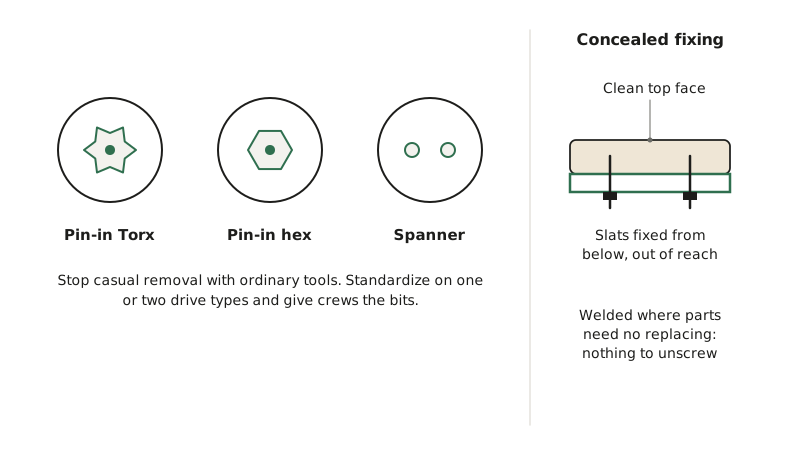
- Welded construction wherever parts do not need to be replaced. A one-piece welded frame has nothing to unscrew.
- Concealed fasteners on parts that do need to be replaceable, such as wood or plastic slats fixed from below rather than through the face.
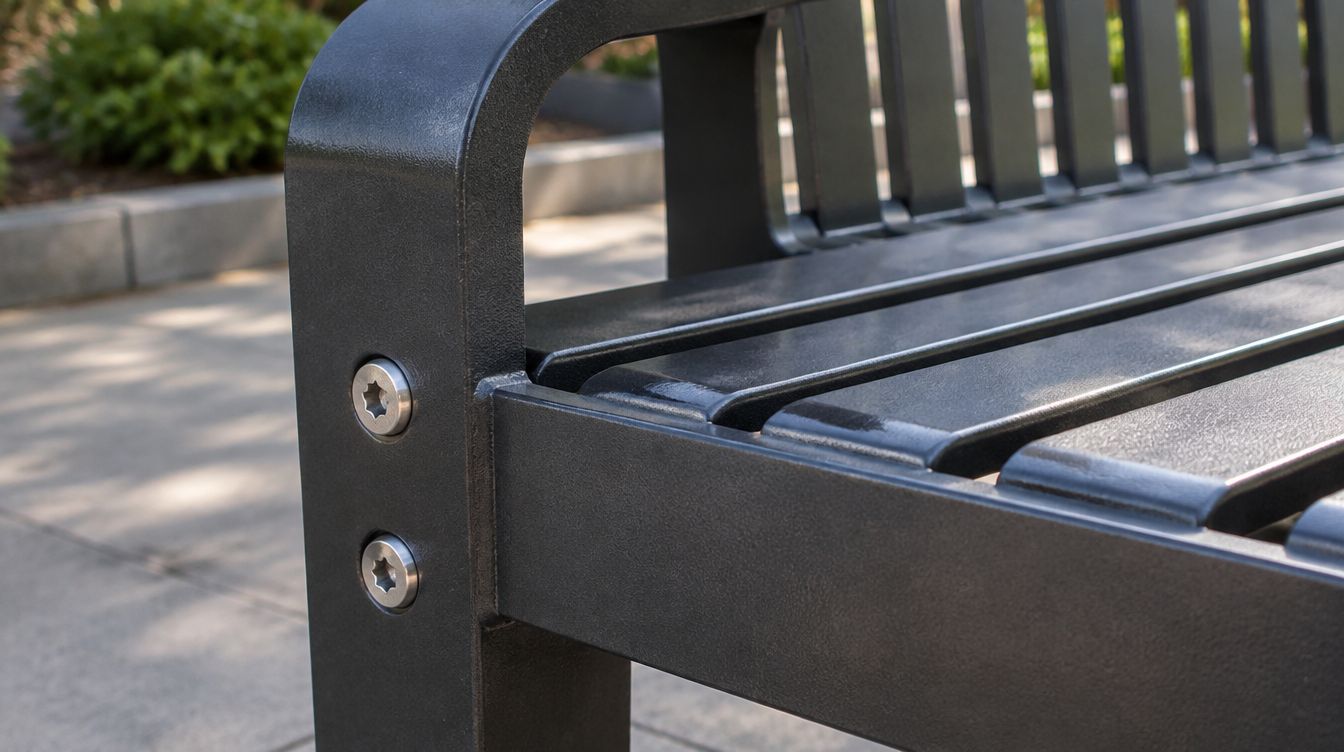
- Tamper-resistant heads where fasteners must be visible. Common types include pin-in Torx, pin-in hex and spanner (two-hole) heads. They stop casual removal with ordinary tools. They do not stop a determined person with the right bit, so they work best combined with concealment.
- Secure anchoring. Surface mount anchors should have tamper-resistant heads or caps. Embedded legs are the most secure because there is nothing to unbolt.
Standardize on one or two tamper-resistant drive types across your site, and give the bits to your maintenance crews. Too many types slow repairs.
Choose materials that shrug off abuse
- Steel is the most robust choice for frames, seats and receptacle bodies. Solid bar and thick-walled tube resist bending far better than thin sheet.
- Perforated or slotted steel panels are strong, drain well and make stickers and graffiti harder to apply in one clean piece.
- Wood is comfortable but can be carved, burned and kicked out. Use dense species, thicker slats and supports at close spacing. Make slats easy to replace.
- Recycled plastic resists rot and many graffiti paints wipe off it, but it can be scratched, melted or burned. Check how it performs against flame and heat.
- Avoid glass and thin acrylic in unsupervised locations unless they are designed and tested for impact.
Finishes that hide and shed damage
- Dark, matte colours hide scuffs, minor scratches and residue from graffiti removal better than light or glossy colours.
- Textured powder coats disguise light scratches and are harder to write on neatly.
- Galvanizing under powder coat means a deep scratch exposes zinc, not bare steel, so damage does not turn into rust.
- Anti-graffiti coatings come in two kinds. Sacrificial coatings are removed along with the graffiti and must be reapplied. Permanent, non-sacrificial coatings let graffiti be cleaned off repeatedly. Check compatibility with the base finish before applying either.
- Bare stainless steel has no coating to scratch through. Scratches show as bright marks rather than a different colour, and light marks on a brushed finish can be softened with an abrasive pad, though a perfect match is hard.
Design details that discourage misuse
- Intermediate armrests on long benches discourage skateboard grinding along the edge while giving seated people something to push up from. Design them to look like part of the bench, not a deterrent bolted on afterward.
- No easy handholds for prying. Avoid loose trim and caps that can be pulled off.
- Receptacles built for fire. Steel bodies, lids that limit oxygen and no plastic outer shells reduce damage when someone sets the contents alight. Liners will still burn, so plan for replacement.
- Enclosed or recessed locks on receptacle doors and removable bollards, so they cannot be jammed or glued easily.
- Bike racks made from solid steel or thick-walled tube that resist cutting. Avoid racks with bolted, removable sections that can be undone to free a locked bike.
Our Arc Rack is a one-piece welded steel frame with no removable parts, which is the kind of simple construction that holds up in exposed locations.
Placement and site management
Where furniture sits affects how often it is targeted. Principles from crime prevention through environmental design (CPTED) apply:
- Place furniture where people can see it: near entrances, windows, active frontages and well-used paths.
- Light it well at night. Dark corners attract damage and make people feel unsafe.
- Avoid hidden spots behind walls, dense planting or building corners.
- Do not over-supply. A row of benches in a place nobody uses can become a target. Match quantity to real demand.
- Involve local businesses, schools and residents. Furniture that people feel ownership of is better looked after.
Fast repair is part of the design
Damage that stays visible invites more damage. The most effective vandalism strategy is often a maintenance one:
- Remove graffiti within a day or two whenever possible. Many Canadian municipalities have graffiti bylaws that set removal deadlines for property owners, so check what applies to your site.
- Keep spare parts in stock: slats, fasteners, liners, lids and touch-up paint.
- Use the same models across a site, so parts are interchangeable.
- Log damage by location. Patterns show where to change the furniture, the lighting or the layout.
- Choose suppliers who can supply replacement parts for years after purchase.
Frequently asked questions
Is there furniture that is truly vandal-proof?
No. Any product can be damaged with enough time and tools. Vandal-resistant furniture raises the effort needed, limits visible damage and makes repairs fast. That is usually enough to reduce repeat incidents.
Do anti-graffiti coatings change how furniture looks?
Some can add gloss or slightly change colour. Test a sample on the actual finish before coating a whole site, and ask the coating supplier which cleaners to use.
Are tamper-resistant fasteners worth it?
Yes, for any fastener people can reach. They are inexpensive and stop most opportunistic removal. Pair them with concealed fixings and make sure your crews have the right bits.