Armrests, Dividers and Anti-Skate Design
How armrests, dividers and edge details can protect benches and seat walls from skateboard damage without making public seating feel hostile to the people it is meant for.
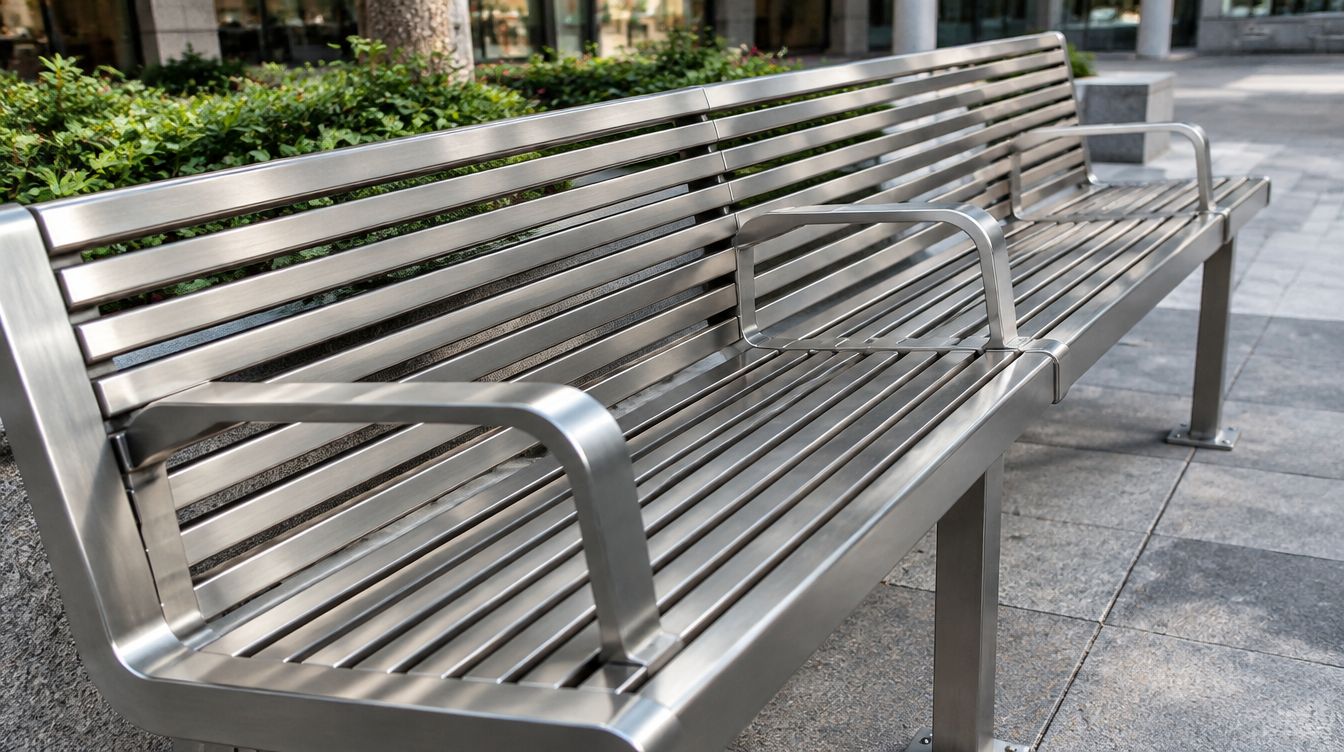
Long, smooth, hard edges attract skateboarders. A bench or seat wall that gets grinded regularly loses its coating, chips at the corners and starts to look neglected within a season. Owners respond with armrests, dividers and metal knobs. Used well, these details protect furniture and help people sit and stand. Used carelessly, they make seating uncomfortable and send the message that some people are not welcome. This guide covers how to get the protection without the hostility.
Why skateboards damage seating
Skaters look for a continuous edge at a useful height, a smooth top surface and a good run-up. When a board's trucks slide along an edge, they wear through powder coat and paint, polish down to bare steel, and knock chips out of concrete and stone. Bare steel then rusts, especially where salt is used in winter. Wax applied to make edges slide better also leaves stains and makes surfaces slippery for people sitting down.
The furniture most at risk:
- backless benches with long, straight, square edges;
- concrete or stone seat walls and planter edges;
- benches set near smooth paving with plenty of room to approach;
- plazas with steps, ledges and rails close together.
Armrests and dividers
An armrest or divider that interrupts the seat edge is the simplest deterrent, because it shortens the length of edge a board can slide along. It also does real work for seated people:
- People push on armrests to stand up and lower themselves down, which matters for older adults and anyone with weak knees or hips.
- Dividers mark out individual seats and can make strangers more comfortable sitting on the same bench.
- They give a handhold for people steadying themselves.
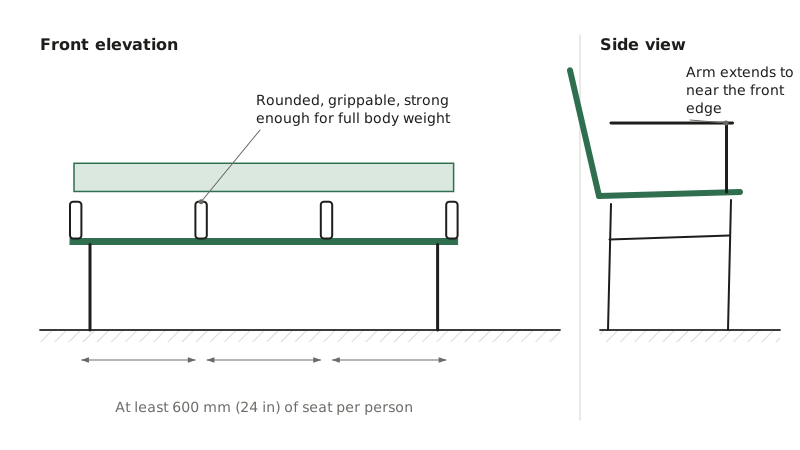
Place intermediate arms to match how people sit. A common planning figure is about 600 mm (24 in) of seat width per person, so a 3-seat bench has dividers or arms that leave at least that much between them. Arms that are too close squeeze larger people and anyone with a bag or a child on their lap. Make arms rounded, grippable and strong enough to take full body weight. Extend them toward the front of the seat, where hands naturally go when rising.
Many benches, including our Flat Bar Bench, can be ordered with end arms only or with end and centre arms, so you can match the level of protection to each location.
Edge details and skate stops
Where arms are not suitable, such as seat walls and planter edges, small fixed elements on the edge do the same job.
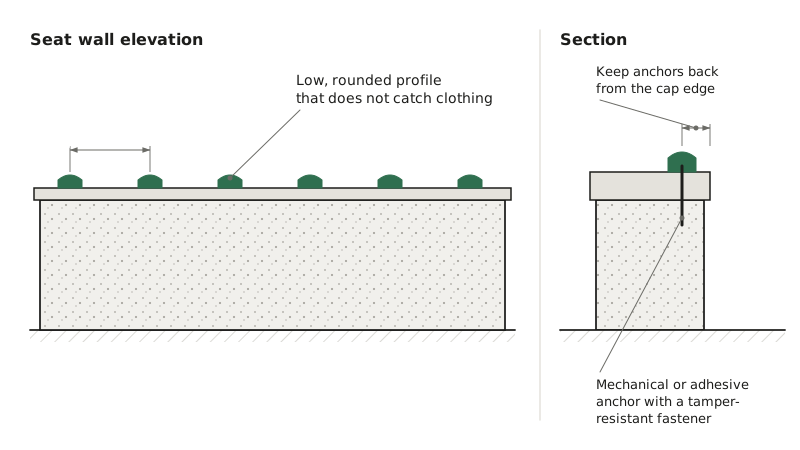
- Skate stops: small metal blocks or knobs fixed to the edge at intervals. Space them closely enough that there is no useful run between them. Choose low, rounded profiles that do not catch clothing or bruise someone sitting down.
- Textured or broken edges: a stone edge with a chamfer, a rough finish or periodic notches is harder to grind.
- Integrated design: on new projects, design seating with a varied profile, steps in height or planting breaks so deterrence is part of the form rather than added later.
- Durable finishes: on steel, hot-dip galvanizing under powder coat limits rust where the coating does get worn.
Skate stops can be retrofitted to existing walls with mechanical anchors or adhesive anchors. Use tamper-resistant fasteners, and check the substrate first. Thin stone caps can crack if anchors are set too close to the edge.
Avoiding hostile design
Some anti-skate and anti-loitering details go too far. Sloped seats, spikes, very short seat segments and arms placed so no one can recline make seating uncomfortable for everyone, including the older adults, pregnant people and tired workers who most need a place to rest. They also attract public criticism and can damage the reputation of the owner.
A few principles keep protection proportionate:
- Design for the people sitting, then protect the furniture. Every deterrent should still allow comfortable sitting and standing.
- Use the lightest measure that works. End arms alone may be enough on a bench that sees occasional skating.
- Do not use armrests to stop people lying down as a substitute for housing and outreach. It does not solve the underlying problem and it makes the bench worse for everyone.
- Keep some seating with open, generous form, such as backless benches with end arms only, where groups and families can sit together.
- Explain the design. In community consultation, be clear about why arms or stops are being added.
Give skaters somewhere to go
Deterrents work best alongside a real alternative. A skate park, a designated skate spot or a plaza with purpose-built skateable elements draws skaters away from benches and seat walls. Some cities design robust, skate-friendly ledges into public spaces on purpose, with steel-capped edges built to take the wear. If the community has no legal place to skate, expect continued pressure on whatever edges are available.
Checklist for new seating
- Identify locations with a skating history or high risk.
- Choose benches with end arms as a baseline, and centre arms where skating is a known problem.
- Leave enough seat width between arms for an adult with a bag.
- Specify galvanized and powder-coated steel or durable stone with eased edges.
- Plan skate stops for seat walls and planter edges at the design stage.
- Avoid sloped seats, spikes and other details that punish sitting.
- Coordinate with recreation staff on legal places to skate nearby.
Frequently asked questions
Do skate stops really work?
They are effective when spaced closely enough to remove any useful run, and when they are fixed securely. Loose or widely spaced stops get knocked off or skated around.
Can I add arms to existing benches?
Some bench models accept bolt-on centre arms. For others, a custom bracket can be made, but check that the frame and seat can carry the load before adding anything.
Will armrests make benches harder to use for wheelchair users?
Arms do not affect someone who stays in their wheelchair beside the bench. For people transferring onto the seat, an open end without an arm can help, so consider leaving one end open on some benches. Our guide to accessible benches covers clear space and transfer needs.