Steel, Wood and Recycled Plastic Benches Compared
Steel, wood and recycled plastic each make a good bench in the right place. This guide compares durability, comfort, upkeep and cost so you can match the material to the site.
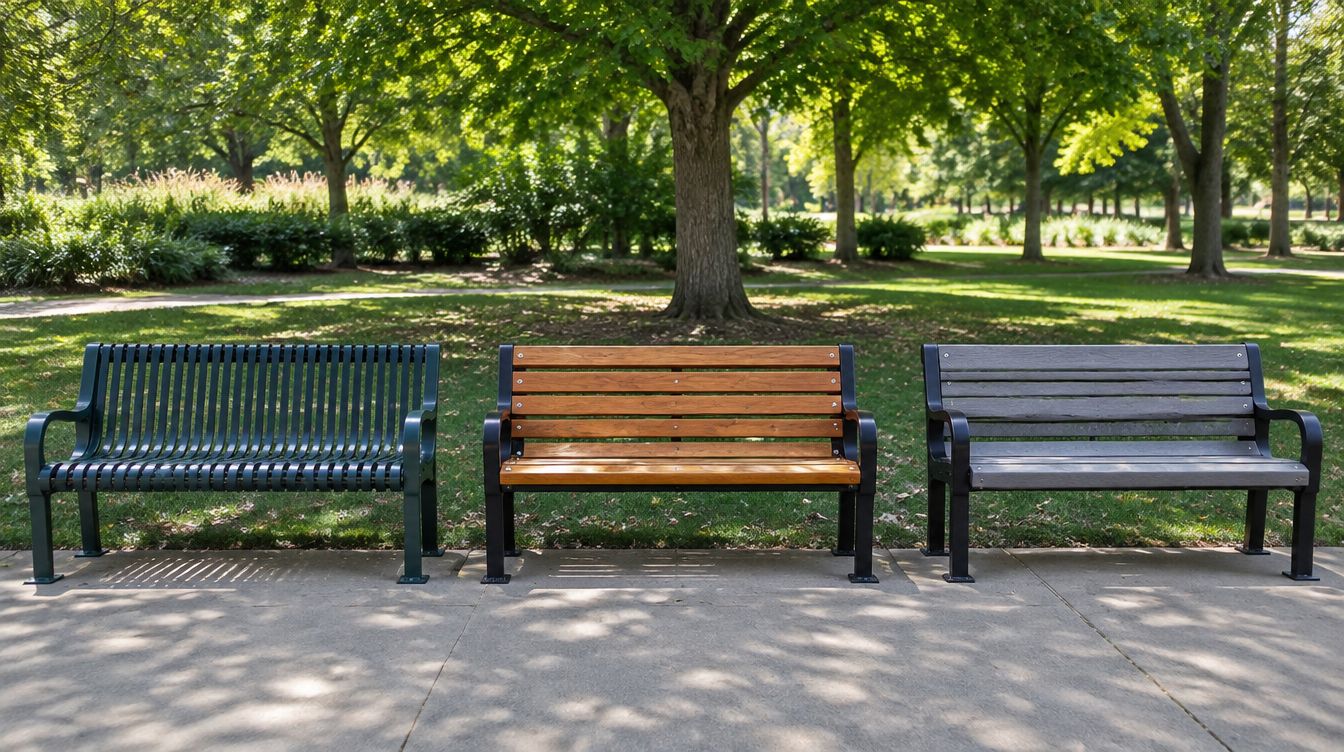
Most outdoor benches use one of three seating materials: steel, wood or recycled plastic. The frame is nearly always steel or aluminum, so the real choice is what people sit on. Each material has a different mix of strength, comfort, look and upkeep, and none is best everywhere. The right answer depends on the climate, how hard the bench will be used, who maintains it and what the rest of the site looks like.
Steel
Steel seats come as flat bar, perforated sheet, expanded metal or rod. Steel is strong for its size, so a steel bench can have slim, crisp lines and long spans without sagging.
- Durability: excellent when the steel is hot-dip galvanized and then powder coated. Galvanizing protects the steel if the coating chips, which matters in salt regions. Powder coat alone over bare steel will rust at the first deep scratch.
- Comfort: steel follows air and sun temperature. A dark steel seat in full summer sun gets hot, and in winter it is cold to sit on. Lighter colours and shade help.
- Maintenance: wash it, and touch up chips before rust spreads. A well-applied finish lasts many years.
- Vandal resistance: very good. Hard to cut, burn or break. Graffiti can be cleaned from most powder coats with suitable removers.
- Look: modern and clean, available in any colour.
Steel is the safest choice for busy urban sites, transit stops and places with a history of vandalism. Our Flat Bar Bench is a typical example.
Wood
Wood is the most comfortable seat in most climates. It stays close to air temperature, feels warm to the touch and has a natural look that suits parks and residential areas.
- Species: dense tropical hardwoods such as ipe are very durable but raise sourcing questions, so ask for certified wood. Thermally modified ash or pine is a durable alternative from northern forests. Cedar is light and rot-resistant but soft and easy to carve into.
- Weathering: untreated wood turns silver over a season or two. This is surface change, not rot. If you want the original colour, plan to clean and oil it regularly.
- Movement: wood swells and shrinks with moisture, and can check (develop small surface cracks). Good designs leave gaps between slats and use fasteners that allow some movement.
- Maintenance: sand out splinters and graffiti, tighten fasteners, and replace damaged slats. Individual slats are easy to swap if the design allows it.
- Vandal resistance: moderate. Wood can be carved, burned or pried off a frame.
Wood suits parks, waterfronts, campuses and anywhere comfort and warmth matter more than absolute toughness. The Timber Slat Bench pairs wood slats with a galvanized steel frame.
Recycled plastic
Recycled plastic lumber, usually made mostly from high-density polyethylene (HDPE), looks like painted or stained wood but needs almost no upkeep.
- Durability: it does not rot, splinter or need sealing, and colour runs through the full thickness.
- Movement: plastic lumber expands and contracts with temperature more than wood or steel. Designs need room for this at the ends of slats.
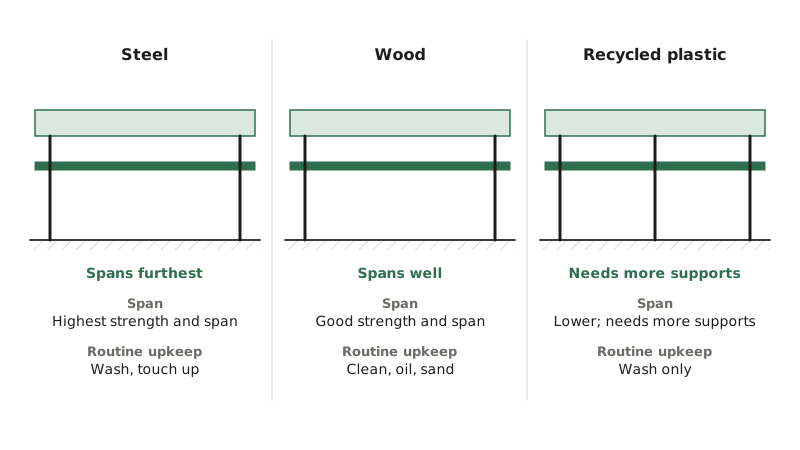
- Sag: it is less stiff than wood, so long unsupported spans can bow over time, especially in hot weather. Look for closer support spacing or steel reinforcement in the slats.
- Weight: heavier than most wood, which helps with stability on freestanding benches.
- Maintenance: wash it. Scratches can often be sanded or lightly heat-treated out. It cannot be repainted.
- Vandal resistance: good against graffiti on many products, but it can be scorched or melted with a lighter.
Recycled plastic is a strong choice for owners who want a wood look with minimal maintenance, and it can support sustainability goals. Check the recycled content claim and ask how the product handles long spans.
Side-by-side comparison
| Factor | Steel | Wood | Recycled plastic |
|---|---|---|---|
| Strength and span | Highest | Good | Lower, needs more supports |
| Seat temperature | Follows sun and air | Most comfortable | Moderate |
| Routine upkeep | Wash, touch up | Clean, oil, sand | Wash only |
| Vandal resistance | High | Moderate | Moderate to good |
| Relative purchase cost | Mid | Mid to high | Mid |
Purchase price varies more with design, size and finish than with the seat material itself. Compare costs over the expected life, including labour for maintenance, not just the price per bench.
How climate and site change the choice
- Hot, sunny sites: favour wood or light-coloured finishes. Avoid dark steel seats without shade.
- Cold winters: wood and plastic are warmer to sit on in shoulder seasons. All three survive freezing if the frame is protected from corrosion.
- Road salt and coastal air: the frame matters most. Specify hot-dip galvanizing under the powder coat, or stainless hardware at minimum. Keep benches out of snow storage areas.
- High-vandalism areas: steel, with tamper-resistant fasteners and anchors.
- Heritage or natural settings: wood blends in best.
Mistakes to avoid
- Buying powder-coated steel without galvanizing for a salted street.
- Choosing a soft wood species for a busy downtown location.
- Using long recycled plastic slats with no intermediate support.
- Mixing materials across a site with no plan, so every bench needs different parts and care.
- Specifying wood and then never budgeting for oiling or slat replacement.
Frequently asked questions
Which bench material lasts the longest?
A galvanized and powder-coated steel bench usually has the longest life with the least effort, often well beyond a decade. Durable wood and recycled plastic can match it if they are maintained and the frame is well protected.
Is aluminum a good alternative to steel?
Aluminum does not rust and is lighter, which helps for movable furniture. It is softer and more expensive than steel, and it dents more easily, so it is less common for heavily used fixed benches.
Can I mix materials on one bench?
Yes. A steel frame with wood or recycled plastic slats is the most common bench design of all. It combines the strength of steel with a warmer seat.