Wildlife and Pest Resistant Receptacles
Bears, raccoons, gulls and rats each defeat bins in a different way. Here is how to match lids, latches and openings to the animals on your site, and keep the bins easy for people and crews to use.
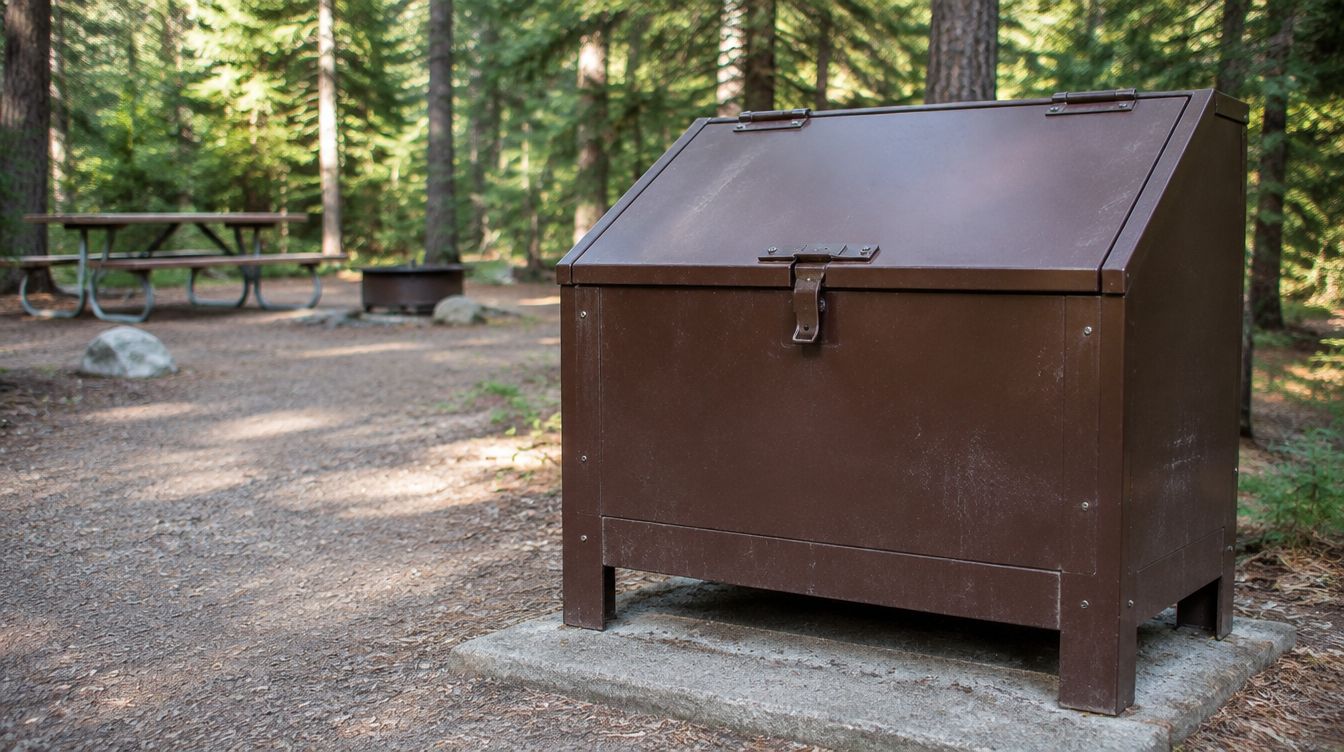
A bin that animals can open does more than make a mess. It teaches wildlife that people mean food, it spreads litter well beyond the bin, and in bear country it can end with an animal being relocated or destroyed. The good news is that most wildlife problems come from a handful of design gaps. Close the right gaps for the animals you actually have, and keep the bin simple enough that people still use it.
Know which animals you are designing for
Different animals attack a bin in different ways, so start with an honest list of what visits the site. A downtown plaza and a trailhead need very different hardware.
- Bears use strength and persistence. They pull, pry, rock and bite. They will work at a lid for a long time if they smell food, and they remember bins that paid off.
- Raccoons use their hands. They can lift flaps, turn simple knobs and squeeze through surprisingly small openings. Anything a toddler could open, a raccoon can probably open.
- Gulls, crows and ravens pull food out of open tops and wide slots, then scatter it while they eat. They are the main problem at beaches, waterfronts and food courts.
- Rats and mice enter through gaps at the base, drain holes and gaps around doors. They also chew through plastic liners and bags.
- Squirrels, coyotes, foxes and dogs mostly tip over light bins or dig into bags left beside full ones.
Lids, latches and openings that work
The opening is where most failures happen. A good wildlife-resistant design keeps food out of sight and out of reach, while letting a person drop in a coffee cup with one hand.
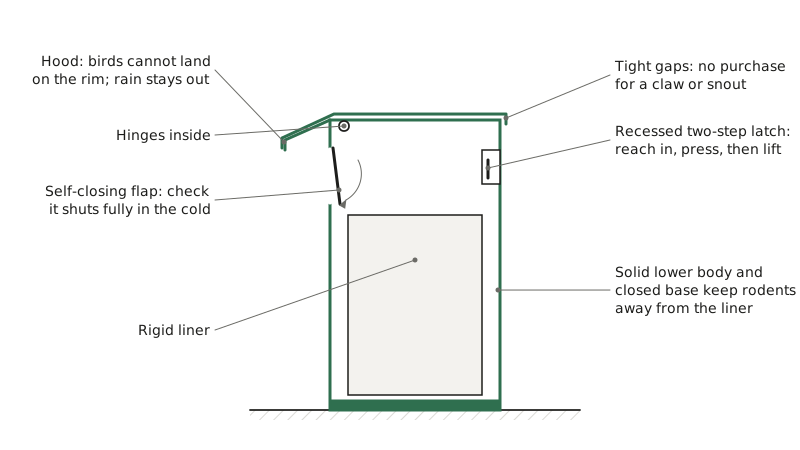
- Covered or side openings. A hood or canopy over the opening stops birds from landing on the rim and pulling bags out. It also keeps rain off the contents, which cuts smells.
- Self-closing flaps. A spring or gravity flap that swings shut after each use blocks birds and hides smells. Check that it closes fully every time, including in cold weather.
- Two-step or recessed latches. For bears and raccoons, the latch should need a motion an animal is unlikely to make, such as reaching into a recess and pressing a lever while lifting. Avoid exposed handles a claw can hook.
- Tight tolerances. Gaps around lids and service doors should be small enough that a claw or snout cannot get purchase to pry. Hinges and hardware should be on the inside where possible.
- Solid lower body. Slatted or open sides look light and clean, but a solid lower section and a closed base keep rodents out of the liner area.
There is always a trade-off. Every extra step to open the bin adds friction for the public. If people cannot figure out the latch, they leave the bag on top of the bin, which is worse than an ordinary bin. Clear graphics on the lid help a lot.
Bear-resistant bins need real testing
Do not rely on a supplier calling a bin "bear-proof". No bin is bear-proof, and an untested design is a guess. Many Canadian parks and Bear Smart communities look for containers that have passed testing through the Interagency Grizzly Bear Committee program in the United States, or an equivalent program accepted by the province or park agency. Some provinces and municipalities also set their own bylaw requirements for waste storage in bear areas. Confirm what your local authority or park agency accepts before you specify.
Testing matters most for the latch and lid, but anchoring matters too. A bear that cannot open a bin will try to roll it. Bear-area bins should be bolted to a concrete pad or embedded, never left freestanding.
Practical features for rodents and birds
Most urban sites are not fighting bears. They are fighting gulls, crows and rats, and the fixes are cheaper.
- Choose a hooded top or restricted opening over an open-top bin anywhere near water or food vendors.
- Use a rigid inner liner with a closed bottom. A bag hung inside an open frame is easy for rats to reach and chew.
- Seal or screen drain holes. Drainage is useful, but a large open hole at grade is a rodent door.
- Raise the bin on a solid pad and keep the area around it free of spilled food. Rats follow the spill, not the bin.
- Pick materials that resist chewing. Steel bodies and steel liners hold up far better than thin plastic.
Our Slat Receptacle and Stream 3 Recycling Station can be built with covered tops and restricted openings for sites where birds or raccoons are a problem. Ask us about the options for your location.
Placement and servicing matter as much as hardware
A strong bin that overflows is not wildlife resistant. Once the bin is full, people pile bags beside it or jam the lid open, and animals get in. Plan collection so bins rarely reach capacity, and add extra pickups during peak seasons such as summer weekends or fall, when bears feed heavily before denning.
- Keep bins away from dense brush and tree cover where animals feel safe approaching.
- In bear areas, avoid placing bins right beside picnic tables or campsites. A short walk is fine and keeps animals away from where people sit.
- Make sure the latch is easy for collection crews. If crews find it slow, they may leave it unlatched.
- Clean bins regularly. Food residue on the outside attracts animals even when the bin is closed.
Common mistakes to avoid
- Buying a heavy-duty bin and leaving it unanchored. Animals tip it and the latch no longer matters.
- Mixing locking bins and open bins at the same site. Animals learn which bins pay off, and people use the easy ones.
- Forgetting recycling. Drink containers and food packaging attract animals too, so recycling streams need the same lid design as waste.
- Choosing latches that freeze or jam with ice in winter. Test them in the conditions you expect.
- Skipping signs. A short note explaining why the lid locks makes people far more willing to latch it.
Frequently asked questions
Are bear-resistant bins harder for people with disabilities to use?
They can be. Look for latches that work with one hand, without tight grasping or twisting, and place the opening within a comfortable reach range. CSA B651 and provincial accessibility rules set reach and operation requirements for operable parts in many settings, so confirm which apply to your site.
Do raccoon-resistant bins need to be bear tested?
No. If bears are not present, a self-closing hood, tight lid and secure latch will handle raccoons. Save the cost of bear testing for sites that need it.
Will a covered top reduce capacity?
Slightly, because the hood takes up some space and people cannot overfill it. That is usually a benefit. Plan collection around the usable volume of the liner, not the outside size of the bin.