Choosing Outdoor Waste Receptacles
How to pick a public waste receptacle that holds enough, keeps rain and animals out, is easy for crews to empty and survives years of use.
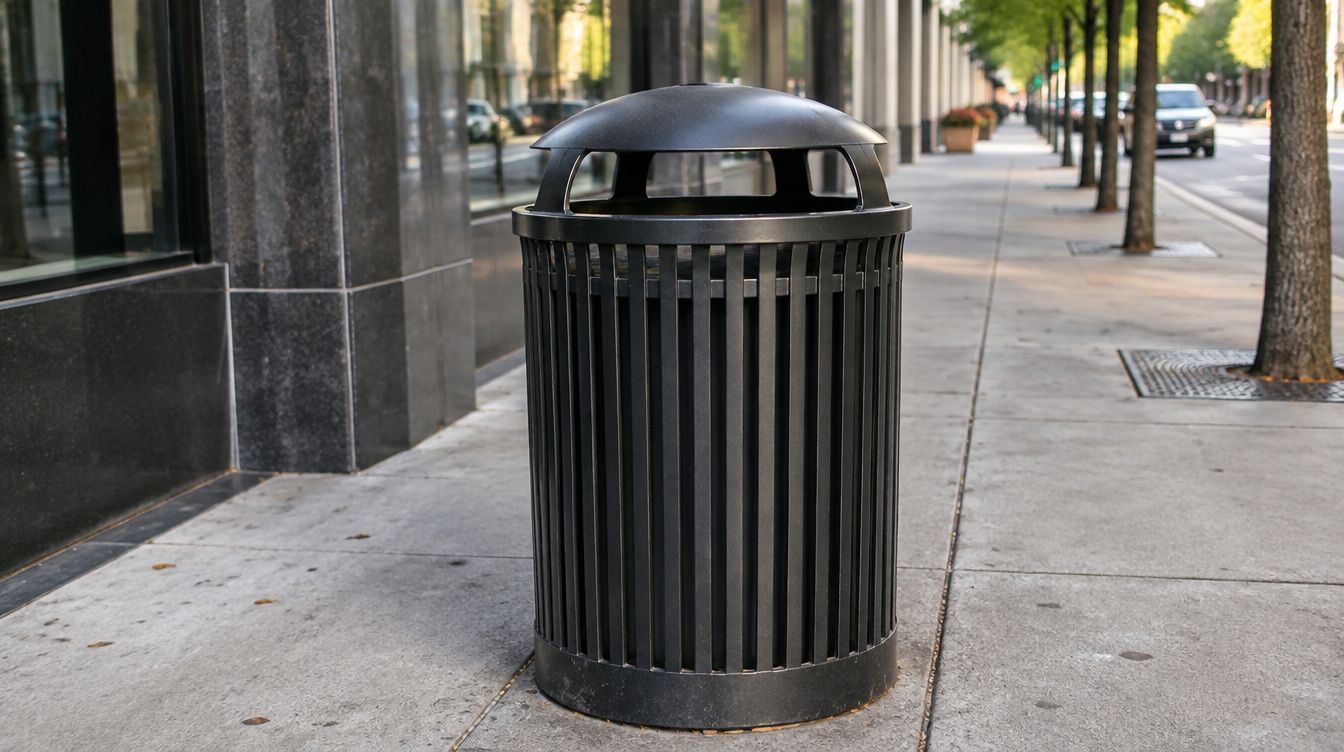
A public waste receptacle has a hard job. It has to be big enough not to overflow, small enough not to swallow household garbage, open enough that people use it, closed enough to keep out rain and animals, and easy for maintenance crews to empty dozens of times a day. Getting the balance right saves money on servicing and keeps streets and parks clean. Here are the decisions to work through, in roughly the order that matters.
Capacity
Outdoor receptacles are usually sized around the liner they hold. Common sizes include:
- About 23 to 30 gal (85 to 115 L): building entrances, small parks, low-traffic paths.
- About 32 to 36 gal (120 to 135 L): the most common size for streetscapes, transit stops and busy parks.
- About 45 gal (170 L) and up: event spaces, beaches and food courts with heavy, bulky waste.
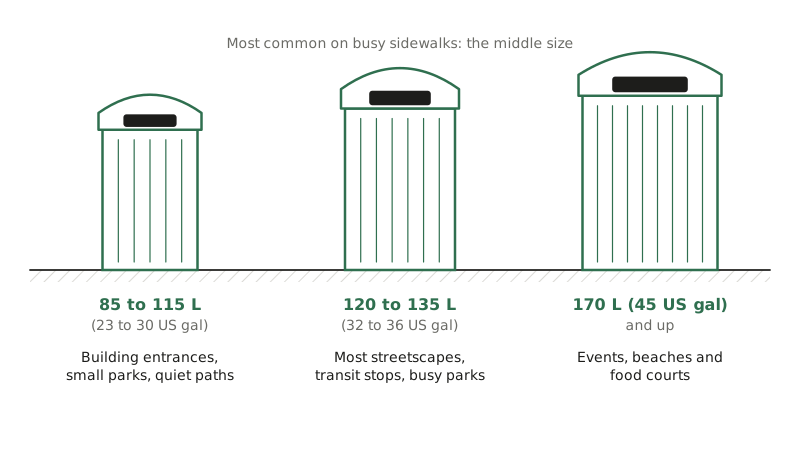
Bigger is not always better. A large bin that is emptied on a fixed schedule still holds heavy, wet waste that is hard to lift, and a mostly empty liner gets changed anyway. Match the size to how quickly the bin fills between pickups. Our guide to capacity and service frequency walks through the calculation.
Lids and openings
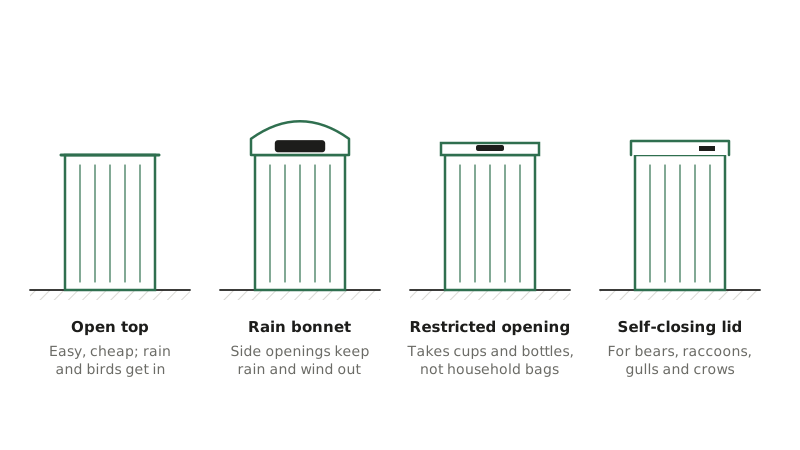
The top of a receptacle does more to control litter than any other part.
- Open top: easiest to use and cheapest, but rain fills the liner, wind blows litter out, and birds and animals get in. Best only for sheltered spots that are emptied often.
- Rain bonnet or dome top: a cover with side openings keeps most rain out and stops wind from lifting litter. This is the usual choice for exposed sites.
- Restricted opening: a smaller slot or round hole discourages people from stuffing in household bags and pizza boxes. Size it for coffee cups, food wrappers and bottles. Make it too small and people leave items on top.
- Self-closing or latched lids: needed where bears, raccoons, gulls or crows are a problem. Make sure the latch is usable with one hand and does not trap fingers.
Consider reach and height. The opening should be easy to use from a wheelchair and by children, which generally means a comfortable height above the ground and no push flap that requires much force.
Liners and emptying
Crews may empty a single receptacle hundreds of times a year, so small inefficiencies add up.
- Side-opening door or lift-off lid: a side door lets crews slide the liner out at ground level instead of lifting it over the rim. This reduces back strain with heavy bags.
- Rigid inner liner: a plastic or galvanized liner holds the bag in place, protects the outer shell and can be pulled out for cleaning.
- Bag retention: a ring or clip that holds the bag edge keeps it from sliding down into the bin.
- Drainage: a few holes or a raised floor in the shell let water out and stop rust from sitting in standing water.
- Keys and locks: if doors lock, standardize the key across all receptacles so crews do not carry a ring of them.
Ask your maintenance staff what they use now and what they dislike about it. They will tell you quickly.
Materials and finishes
- Steel (slatted, perforated or solid sheet) is the most common. It is strong, fire-resistant and holds up to vandalism. Specify hot-dip galvanizing under the powder coat in salt regions and near the coast. Our Slat Receptacle uses this combination.
- Recycled plastic panels on a steel frame look like wood and need little upkeep, but they can be scorched by a cigarette or lighter.
- Concrete is very heavy and stable, hard to tip or steal, but chips at corners and is awkward to relocate.
- Stainless steel suits high-end interiors and sheltered areas. It costs more and shows fingerprints and scratches.
Perforated or slatted steel lets air through, which reduces smell and helps the inside dry. Solid sides hide the liner from view and are easier to clean of graffiti. Choose a color that matches the rest of your site furniture and is visible enough that people find the bin.
Mounting and security
Unanchored receptacles get tipped over, moved or stolen. Anchor them to a concrete pad or footing with tamper-resistant hardware. Surface mounting is common because it lets you relocate the bin later. If the receptacle sits on a paver or grass area, add a small concrete pad so the ground around it does not wear down, and so spills can be hosed off.
Plan for recycling from the start
If you expect to collect recyclables, or might in the future, choose a receptacle family that has matching recycling versions. A side-by-side unit such as the Stream 3 Recycling station puts landfill and recycling openings together, which reduces contamination compared with a recycling bin placed on its own. See our guide to recycling stations and signage.
Buying checklist
- Estimate how fast each location fills, and choose capacity to match the service schedule.
- Choose a top that suits the exposure: rain bonnet for open sites, latched lid where animals are a problem.
- Size openings for street litter, not household bags.
- Specify side access or lift-off tops to protect crews' backs.
- Specify galvanized and powder-coated steel for salt and coastal areas.
- Include anchoring hardware and a pad in the order and the site plan.
- Check that matching recycling units exist in the same family.
Frequently asked questions
What size waste receptacle is standard for a sidewalk?
A receptacle that holds about 32 to 36 gal (120 to 135 L) is the most common choice for busy sidewalks. Quieter streets may do well with something smaller if pickups are frequent.
Do receptacles need lids?
Most exposed outdoor sites benefit from a covered top. Open tops collect rain, which makes bags heavy and messy, and they let wind and animals scatter litter.
How long should an outdoor receptacle last?
A galvanized and powder-coated steel receptacle can serve for many years with routine cleaning and touch-ups. Liners and bag rings wear faster and should be easy to replace.