Running a Memorial Bench Program
A practical framework for setting up a dedication bench program: what the fee should cover, how to handle plaques, locations and renewals, and how to avoid the problems that sink these programs later.
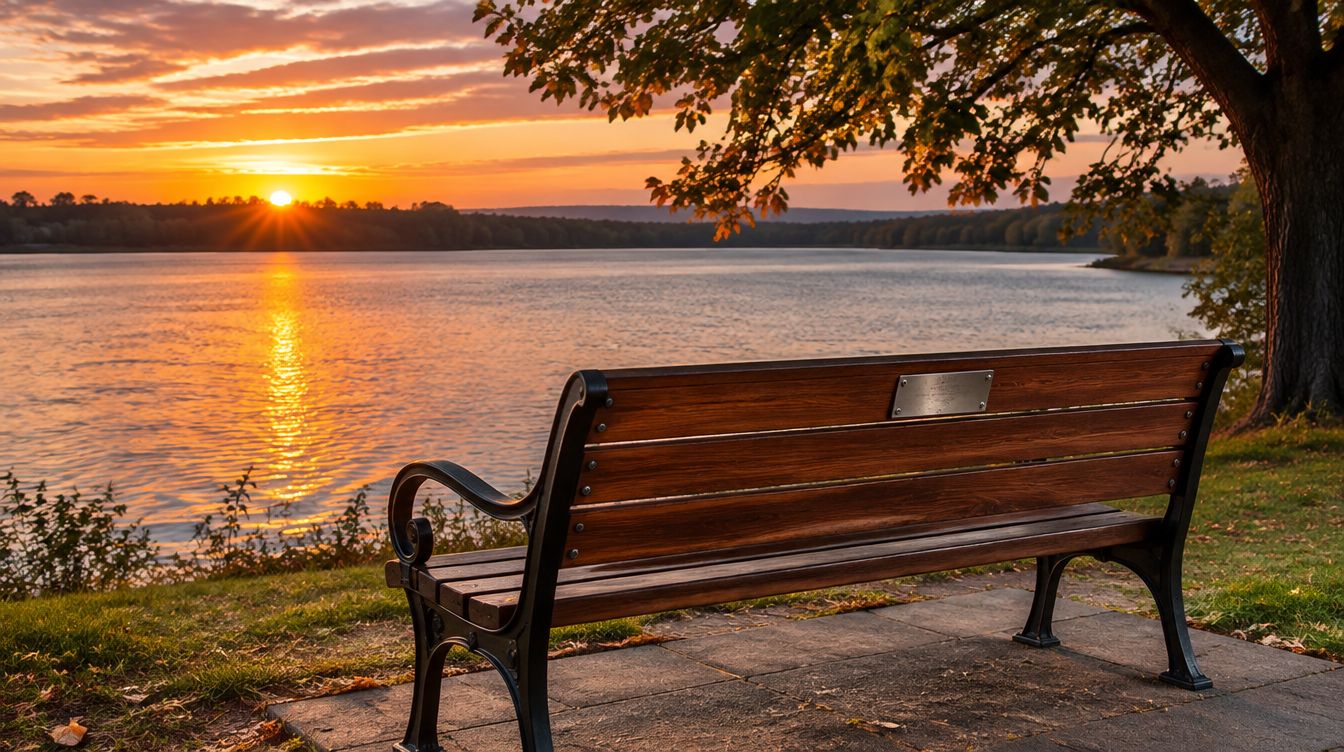
Memorial and dedication bench programs let families, community groups and businesses pay for a bench in a park or along a waterfront in exchange for a plaque. Done well, they add seating the parks budget could not afford and give people a meaningful place to remember someone. Done badly, they leave staff with a backlog of mismatched benches, unhappy donors and no money for repairs. The difference is almost always in the policy written before the first bench goes in.
Write the policy first
A short written policy prevents most disputes. Have it approved by council or the board so staff can point to it when hard cases come up. It should cover:
- Who can apply and whether commercial sponsors are allowed.
- What the fee buys, including the bench, plaque, installation and a defined maintenance period.
- The term of the dedication and what happens when it ends.
- Where benches can go and who decides.
- Plaque rules: size, material, wording limits and approval.
- Personal items such as flowers, photos and decorations.
- Damage and replacement: who pays if the bench is vandalized or worn out.
- Removal or relocation when a park is redeveloped.
Being clear up front is kinder than being vague. Families are dealing with grief, and surprises years later about removal or renewal fees cause real distress.
Set a fee that covers the full cost
The most common mistake is pricing a dedication at the cost of the bench alone. The real cost includes the bench, the plaque, a concrete pad or footing, installation labour, staff time to process the application, and inspections and repairs over the term. If the fee does not cover these, every new memorial bench quietly draws money from the general maintenance budget.
Many programs set a single fee for a fixed term, often around ten years, with an option to renew. Some offer tiers: a plaque on an existing bench for a lower fee, and a new bench for a higher one. Plaques on existing benches are a good option where the park already has enough seating. Review the fee every few years as material and labour costs change.
Standardize the bench and plaque
Allowing donors to choose any bench sounds generous but creates a maintenance problem. Different models need different parts, finishes and hardware. A park with fifteen bench styles looks cluttered and is expensive to keep up.
- Pick one or two approved models per park type, ideally from your site furniture standard, in a set colour.
- Choose durable materials. Galvanized and powder-coated steel frames last well. If you prefer wood, specify a durable species or thermally modified wood and plan for refinishing.
- Standardize the plaque: one size, one material (cast bronze, engraved stainless or anodized aluminum are common), one font, and a character limit.
- Mount the plaque securely with tamper-resistant fasteners, usually on the backrest or a dedicated plaque rail where people can read it while standing.
Our Memorial Bench has a built-in plaque position for this reason. Whatever model you choose, confirm the plaque size and fixing method before you publish the program, so every plaque fits.
Choose locations deliberately
Donors often ask for a specific spot, such as a favourite view or the place a loved one walked every day. Accommodate this where you can, but keep the final decision with staff. A pre-approved list of locations works well:
- Map where benches are actually needed: rest intervals along paths, viewpoints, play areas, transit connections.
- Check each location for an accessible route, firm surface, clear space beside the bench and room for maintenance equipment.
- Avoid utility corridors, areas planned for redevelopment and spots that flood.
- Publish the list and update it as spaces fill.
Set a limit on how many memorial benches a single park or stretch of trail can hold. Rows of dedicated benches along a waterfront can start to feel like a cemetery, and some visitors find that uncomfortable.
Run the application process
A simple, predictable process reduces staff time:
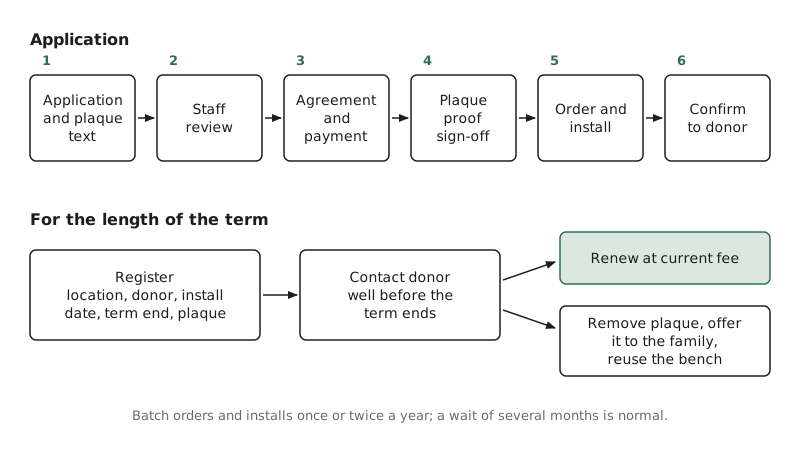
- Application with contact details, preferred locations and draft plaque text.
- Staff review of location and wording against the policy.
- Written agreement and payment.
- Plaque proof sent to the applicant for sign-off.
- Order and installation in the next installation window.
- Confirmation to the donor with a photo and the bench's location.
Batch orders and installations once or twice a year. Groundwork is cheaper in good weather, and grouping benches into one order simplifies delivery. Tell applicants the expected timeline up front, since a wait of several months is normal. Keep a register of every dedicated bench with its location, donor contact, install date, term end and plaque text. Without it, renewals become guesswork.
Plan for renewals and the end of a term
Every bench will eventually wear out or need to move. Decide now how you will handle it:
- Contact donors well before the term ends and offer renewal at the current fee.
- If they decline or cannot be reached after reasonable attempts, the plaque can be removed and offered back to the family, and the bench reused.
- If a bench is damaged beyond repair during the term, the policy should say whether it is replaced at no charge.
- If a park is redeveloped, commit to relocating the bench or plaque nearby where possible and to notifying the donor.
Keep donor contact information current. Many programs ask donors to update details when they move, and it helps to note a second contact.
Frequently asked questions
How long should a dedication term be?
Ten years is a common term. It is long enough to feel meaningful to a family and short enough that the bench is usually still in good condition when renewal comes up. Some programs offer longer terms at a higher fee. Avoid promising "permanent" dedications, since no bench or park layout lasts forever.
Should we allow flowers and personal items?
Most programs allow small temporary items, such as flowers on an anniversary, and remove anything left beyond a set period or that blocks the seat or path. Write the rule into the policy so staff are not making difficult judgment calls on the spot.
Can we offer custom benches for special dedications?
Some programs make exceptions for significant community dedications. If you do, require the custom design to use the same materials and finishes as your standard furniture and to include spare parts. Our custom team can match an existing family of furniture.