Surface Mount vs In-Ground Installation
Bolting furniture to a slab and setting it into the ground each have clear advantages. Here is how to choose between them based on surface, strength, cost and whether you will ever need to move it.
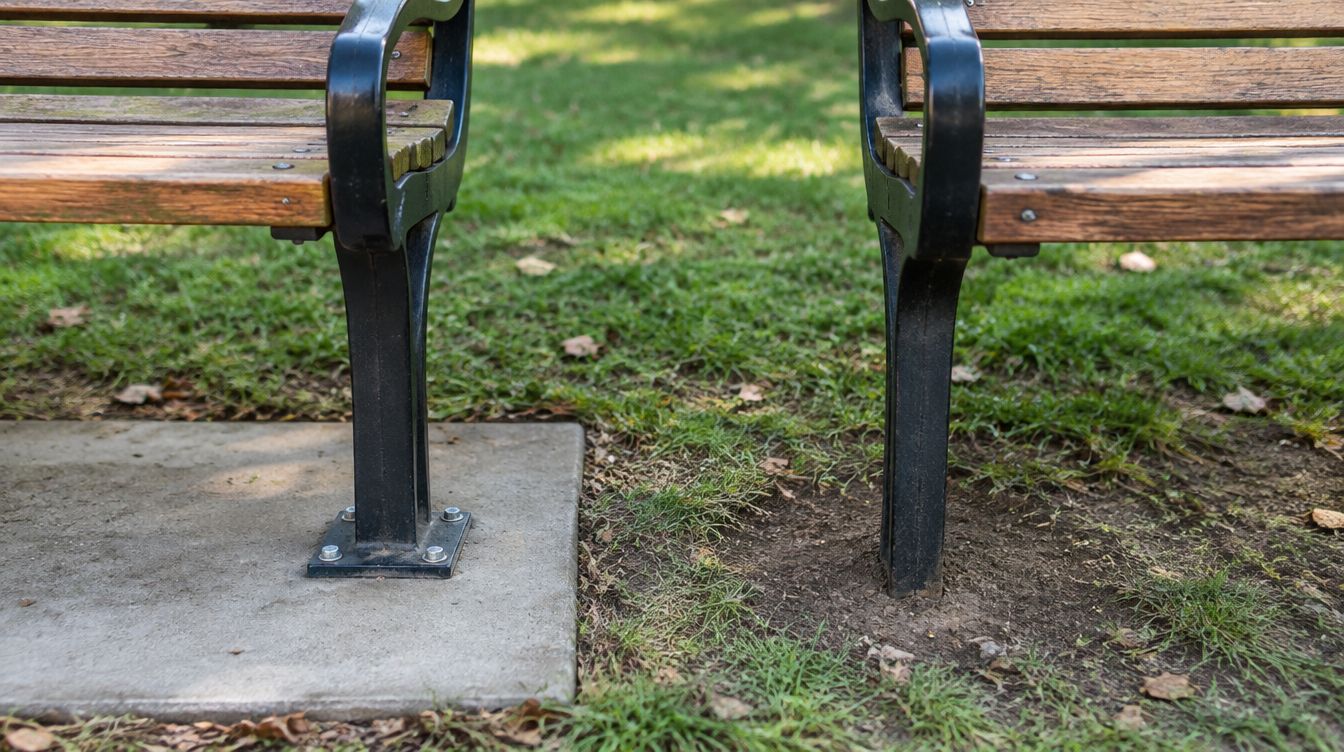
Almost every bench, rack, receptacle and bollard is anchored in one of two ways. Surface mount furniture has base plates or feet that are bolted to an existing concrete surface. In-ground, or embedded, furniture has legs that extend below grade and are set in concrete. Many models are offered both ways, and the choice affects cost, schedule, security and what happens when the layout changes. This guide compares the two so you can choose item by item.
How surface mounting works
The furniture arrives with welded base plates or flanges with pre-drilled holes. The installer positions it, drills into the concrete through the holes and sets anchors, usually wedge anchors or adhesive anchors, then tightens nuts or bolts. Tamper-resistant heads or caps stop casual removal.
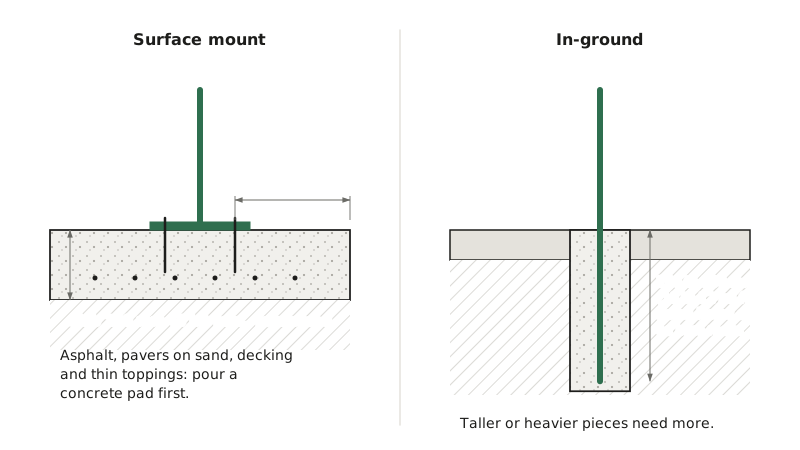
The key requirement is sound concrete. As a rough guide, surface mounting expects a reinforced slab or pad at least 100 mm (4 in) thick, in good condition, with enough edge distance around each anchor. Always follow the anchor manufacturer's minimum embedment and edge distances. Asphalt, unit pavers on sand, wood decking and thin toppings are not suitable bases on their own. Over those surfaces, pour a concrete pad or choose embedded installation.
How in-ground installation works
Embedded furniture has longer legs, often with a cross pin or flared end to lock into concrete. There are two common methods:
- Cast in a new footing: dig a hole, set the item in place, brace it level and plumb, then pour concrete around the legs.
- Core drilled into existing concrete: drill a hole through the slab, insert the leg and fill with non-shrink grout or anchoring cement.
Embedment depth depends on the product, its height and the soil. For small items such as bike racks, embedment is commonly around 250 to 300 mm (10 to 12 in). Taller or heavier pieces need more. Follow the manufacturer's detail, and use an engineer's design where loads are significant or where frost heave is a concern. Shade structures always need footings designed by a professional engineer.
Side-by-side comparison
| Factor | Surface mount | In-ground |
|---|---|---|
| Base needed | Sound concrete slab or pad | Soil, gravel or concrete |
| Installation time | Fast, often under an hour per item | Slower, with concrete curing time |
| Can be relocated | Yes, unbolt and move | Difficult, usually cut off |
| Resistance to removal | Good with tamper-resistant anchors | Excellent |
| Look at grade | Visible plate and bolts | Clean, legs disappear into ground |
| Trip and snag risk | Low plates can catch plows and feet | Very low |
When surface mount is the better choice
- You have good existing concrete. Sidewalks, plazas and building aprons in good condition make surface mounting quick and inexpensive.
- The layout may change. Streetscapes, patios and campuses evolve. Surface mounted items can be unbolted and moved, leaving only anchor holes to patch.
- You need furniture in place quickly. No excavation, no forms and no waiting for concrete to cure.
- Seasonal removal. Items that come out for winter or events are easier to handle with a surface mount, especially if you use removable anchor inserts.
- Buried services or membranes. Over a parking garage roof, a waterproofing membrane or shallow utilities, digging or core drilling may be unsafe or prohibited. A surface mount on a topping slab may be the only practical option, subject to the structural engineer's approval.
When in-ground is the better choice
- No suitable slab. In parks, on gravel, over pavers or on lawn, an embedded installation avoids pouring a pad for every item.
- High theft or vandalism risk. With no exposed bolts, embedded furniture is very hard to remove without power tools.
- Clean appearance. Legs that go straight into the ground look more refined in signature spaces.
- New construction. When paving is being poured anyway, casting legs into footings adds little cost.
- Tall or heavily loaded items. Tall signs, some bollards and items that people lean or pull on often perform better with a deeper embedment.
A third option: rail mount
Some bike racks, such as the Wave Rack, and some seating units are offered on a rail or skid that sits on the surface and is anchored at a few points. Rails spread load, reduce the number of holes and make it easier to move a whole set at once. They are useful for temporary or seasonal bike parking and over surfaces where few anchor points are allowed.
Before you drill or dig
- Locate utilities. Contact your provincial one-call service, such as Ontario One Call or the equivalent in your province, before excavating or core drilling, and check private utilities too.
- Check slab reinforcing and post-tensioning. Drilling into post-tensioned slabs can cut tendons. Scan first and get the structural engineer's approval.
- Confirm drainage. Base plates should not sit in low spots where water and salt collect.
- Keep clearances. Make sure the final position keeps accessible routes and required clearances clear. The rules depend on CSA B651 and provincial requirements; confirm them with the local authority.
- Use the right hardware. Stainless or galvanized anchors suited to the exposure, with tamper-resistant heads where needed.
Frequently asked questions
Can surface mounted bollards stop a vehicle?
Standard surface mounted bollards guide traffic and mark edges. They are not designed to stop a moving vehicle. If you need impact protection, use a crash-rated system designed and installed to its tested detail.
What do we do with old anchor holes after moving furniture?
Cut the anchors flush or remove them, then fill the holes with a patching mortar or epoxy filler. Leaving anchors sticking up creates a trip hazard.
Is one method cheaper?
Surface mount is usually cheaper when good concrete already exists. If you would need to pour a pad, in-ground installation is often similar or lower in cost.