Planter Placement and Maintenance
Where a planter goes decides which plants will survive in it and how much work it will take. Plan placement, plant choice and upkeep together.
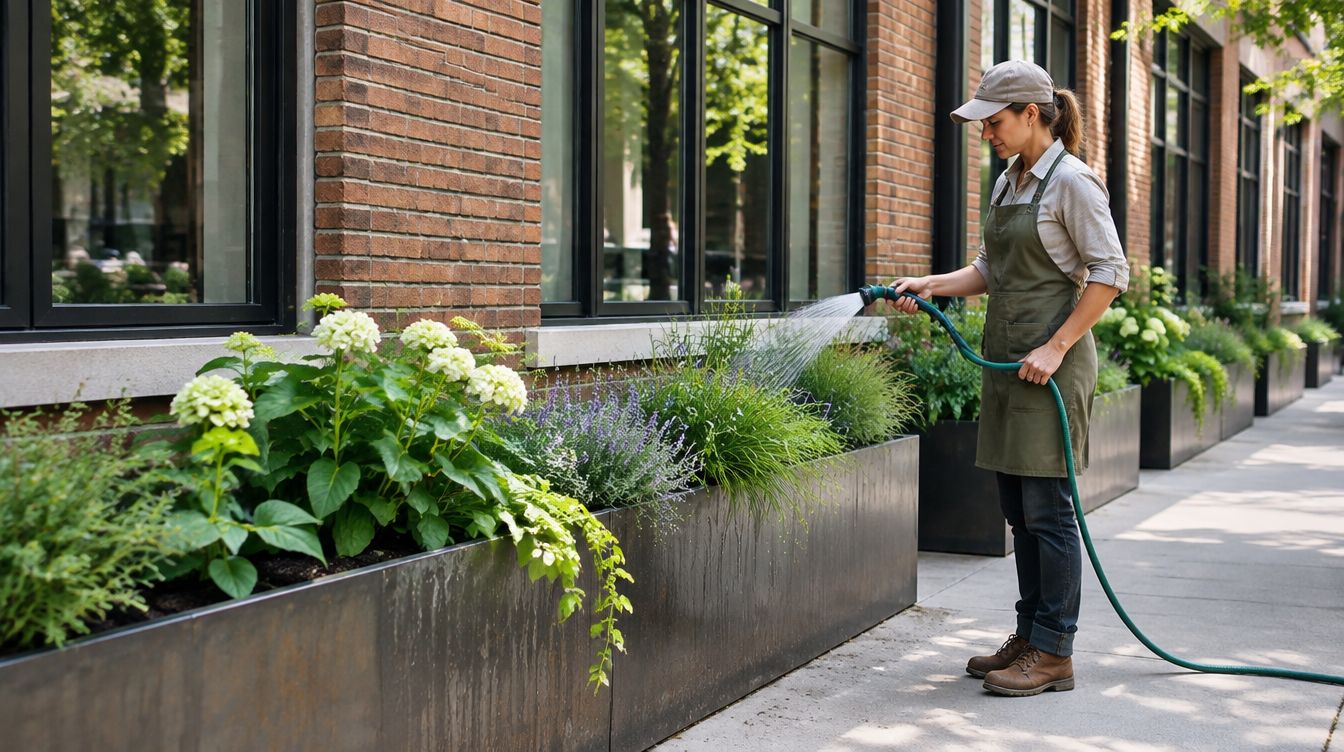
Planters do a lot of quiet work in public spaces. They soften hard plazas, mark entrances, separate patios from sidewalks, guide people along a route and give a street a sense of care. But a planter in the wrong spot becomes an obstacle, and a planter with the wrong plants becomes a box of dead stems by August.
This guide covers where planters earn their place, how to read a site's exposure before choosing plants, and a realistic maintenance routine.
Where planters work well
- Building entrances. A pair of planters frames a doorway and helps visitors find it. Keep them clear of the door swing and the accessible route to the door.
- Edges of seating areas. Planters behind or beside benches give people a sense of shelter, which makes them more likely to sit. They also screen seating from traffic noise and views.
- Patio and plaza boundaries. A run of linear planters defines a cafe patio or event space without the closed-in feel of a fence.
- Breaking up large paved areas. Groups of planters create smaller, more comfortable zones in wide plazas and forecourts.
- Directing movement. Planters can nudge people toward crosswalks or away from a loading area more gently than barriers.
Where planters cause problems
Before placing a planter, check what it would block. Keep planters out of these spots:
- The continuous clear path of travel on a sidewalk or walkway. Accessible route widths are set by the 2010 ADA Standards, with many cities requiring wider sidewalk clear zones. Confirm the local figure.
- Curb ramps, crosswalk landings and the space in front of accessible parking and loading.
- Fire hydrants, fire department connections and standpipes. Local fire codes set clearance distances, so check with the fire department.
- Manholes, valve boxes, utility vaults, catch basins and trench drains.
- Sightlines at driveways and intersections. Low plants are fine. Tall grasses and shrubs in the wrong corner hide children and cyclists.
- Snow storage areas, if your site plows snow into piles in winter.
Also think about weight. A large planter full of moist soil can weigh more than a tonne. On rooftops, podium decks and sidewalks over basements, have the structure checked before placing anything heavy.
Read the exposure before choosing plants
The same planter can face very different conditions a few meters apart. Spend a little time on site, ideally at different times of day, and note:
- Sun hours. Full sun usually means six or more hours of direct sun. Many urban spots between buildings get far less.
- Reflected heat. Planters on asphalt or in front of south- or west-facing glass get extra heat that can scorch leaves and dry soil quickly.
- Wind. Corners of tall buildings and open waterfronts dry plants out and break stems.
- Salt. Anything within splash range of a salted road or sidewalk will collect salt spray and salty meltwater.
- Foot traffic and abuse. Planters beside bus stops and bars get sat on, leaned on and used as ashtrays.
Plant choices by condition
Choose plants for the toughest condition the planter faces, not the average one. Some reliable directions:
- Hot, sunny and dry: ornamental grasses, sedums, lavender, yarrow and other drought-tolerant perennials.
- Shade between buildings: hostas, ferns, heucheras and shade-tolerant groundcovers.
- Salt exposure: plants with a known tolerance to salt spray, such as some junipers, rugosa roses and many native grasses. Ask a local nursery which perform in your area.
- Year-round interest: dwarf conifers and shrubs with colored winter stems keep planters from looking empty in the off season.
- Near seating and play: avoid thorny, spiky or toxic plants, and avoid species that drop heavy fruit onto benches and paving.
Plants that stay in planters through winter should be rated hardier than your local zone, because container roots get colder than roots in the ground. Native and regionally adapted species are usually the safest bet.
A seasonal maintenance routine
Planters need more attention than in-ground beds. Assign responsibility before installation, whether that is parks staff, a landscape contractor, a business improvement district or a tenant.
| Season | Tasks |
|---|---|
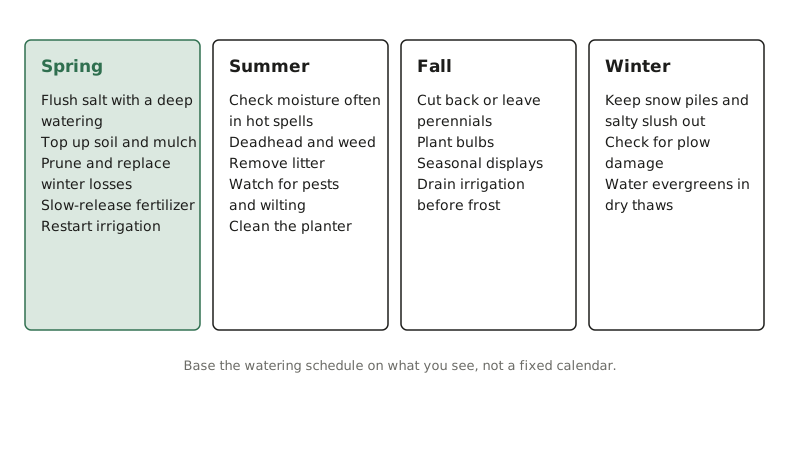
| Spring | Flush salt with a deep watering, top up soil and mulch, prune winter damage, replace dead plants, apply slow-release fertilizer, restart irrigation and check for leaks. |
| Summer | Check moisture often during hot spells, deadhead and weed, remove litter, watch for pests and wilting, clean planter surfaces. |
| Fall | Cut back or leave perennials for winter interest, plant bulbs, switch to seasonal displays if used, shut down and drain irrigation before frost. |
| Winter | Keep snow piles and salty slush out of planters, check for plow damage, water evergreens during dry thaws if the soil is not frozen. |
Small planters in full sun may need checking every day in a heat wave. Larger planters with deep soil and mulch can often go several days. Base the schedule on what you see, not a fixed calendar.
Looking after the planter itself
The container needs attention too. A few minutes per visit keeps it looking new:
- Wash the exterior with mild soap and water to remove soil splash, bird droppings and road film.
- Look for chips or scratches in the coating and touch them up before rust starts, especially near the base and corners.
- Keep drainage holes clear and make sure the planter still sits level with its base lifted off the pavement.
- Remove cigarette butts and litter. A waste receptacle placed nearby cuts down on planters being used as bins.
Frequently asked questions
How far apart should planters be along a sidewalk?
There is no single rule. Space them so the clear path stays continuous and people can step between planters to reach parked cars, building entries and crosswalks. Along a curb, gaps of a car door width or more at parking spaces prevent people from being trapped between a planter and a vehicle.
Should planters be emptied for winter?
Not usually. Emptying a large planter is a lot of work, and an empty planter looks neglected. Plant hardy perennials, grasses or evergreens that can stay year round, make sure drainage is working, and use winter displays such as cut branches if you want seasonal interest.
Who should maintain planters on a commercial street?
It varies. Many municipalities place planters and then sign agreements with business associations or adjacent businesses to water and plant them. Whatever the arrangement, write it down, name a contact and plan for vacations and staff changes, since a few missed weeks in summer can undo a season.