Planter Drainage and Soil
Most failing planters fail below the surface. Get the drainage, soil mix and depth right and the plants above will be far easier to keep alive.
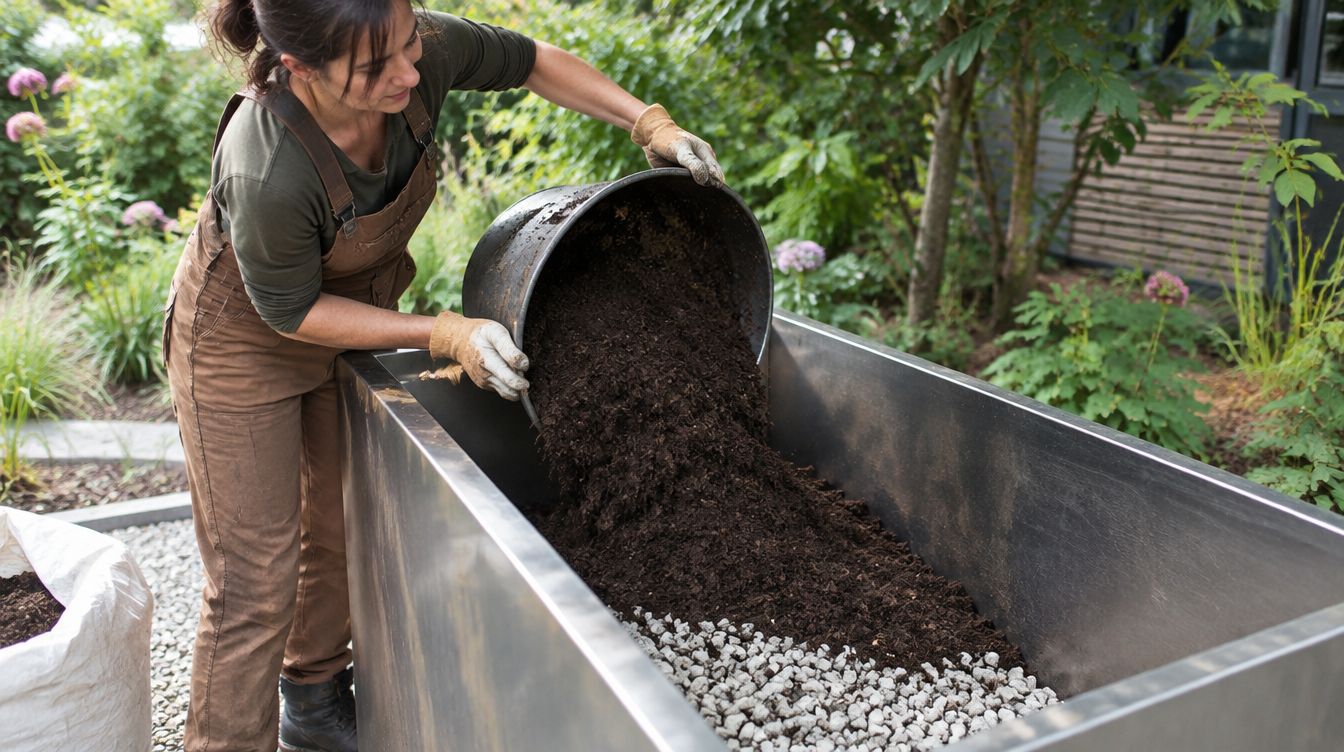
A planter is a small, closed ecosystem with no connection to the ground below. Water cannot soak away into subsoil, roots cannot spread out to find moisture, and the soil heats and freezes much faster than soil in the ground. That is why plants in containers so often struggle even when the same species thrives in a nearby bed.
The good news is that most planter problems trace back to a few decisions made on installation day: how water leaves the planter, what goes inside it, and how deep it is. This guide walks through each one.
Drainage: get water out, not just through
Every outdoor planter needs drainage holes in the base. Without them, rain and irrigation fill the bottom of the planter, the soil stays saturated, roots run out of oxygen and rot. In cold regions, trapped water also freezes and expands, which can push on the walls and seams of the planter.
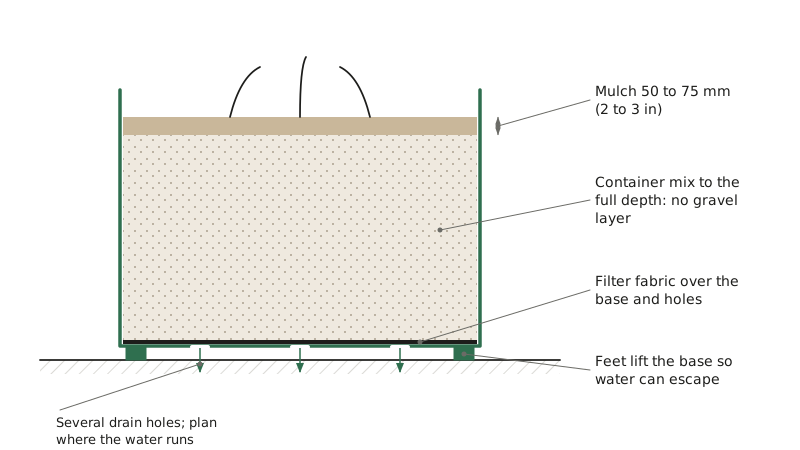
- Size and number. Several holes spread across the base drain better than one central hole, especially in long planters. Larger planters need more total opening area.
- Cover the holes. Place a piece of geotextile filter fabric over each hole or across the whole floor. It keeps soil from washing out and staining the pavement while letting water pass.
- Lift the base. Feet, a raised rim or small spacers create a gap under the planter so water can actually escape. A flat base sitting tight on pavement can seal its own holes.
- Think about where the water goes. Drainage water carries soil fines and fertilizer. On a paved plaza, plan for it to run toward a drain rather than across a walking surface, where it can leave stains or freeze into an icy patch.
Skip the gravel layer
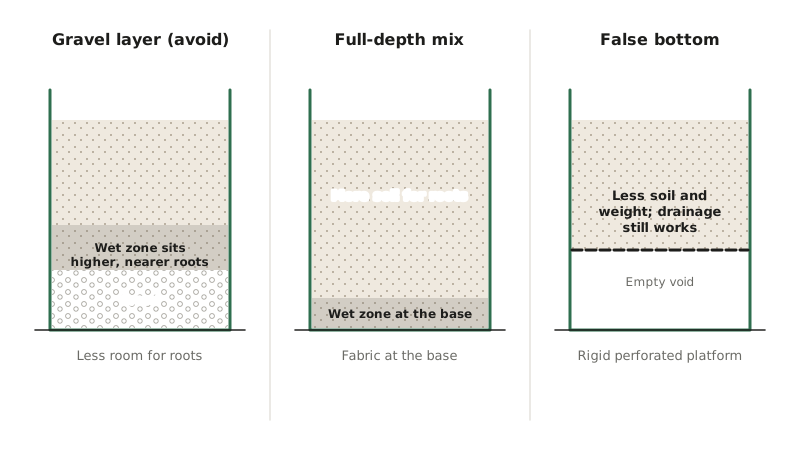
A layer of gravel or broken pots in the bottom of a container is one of the most persistent pieces of gardening advice, and it works against you. Water does not move readily from fine soil into a coarse layer below until the soil above is fully saturated. The result is a wetter zone of soil sitting just above the gravel, closer to the roots, and less soil volume for the plant.
Use the full depth for growing medium instead, with filter fabric at the base. If you need to reduce weight or soil volume in a very deep planter, use a proper false bottom: a rigid, perforated platform that creates an empty void underneath, with the fabric and soil on top. That keeps drainage working while cutting the amount of soil you have to buy and support.
Choose a container mix, not garden soil
Native topsoil or garden soil compacts in a container. Its fine particles pack down under watering, air spaces collapse, and drainage slows to a crawl. Large planters need a mix designed for containers, which stays open and airy for years.
A good commercial planter mix for public spaces usually combines:
- Organic matter such as composted bark or compost, for water holding and nutrients.
- A mineral component such as coarse sand, pumice or expanded shale, for structure and drainage that lasts.
- Light aggregates such as perlite in some mixes, to keep weight down.
For large, long-term plantings, lean toward mixes with more mineral content. Highly organic mixes break down over a few seasons, shrink, and can become dense. Expect any new mix to settle, often by a noticeable amount in the first year, so fill slightly high and plan to top up.
Finish with a layer of mulch about 2 to 3 in (50 to 75 mm) deep. It slows evaporation, keeps soil temperature steadier and reduces weeds. Keep mulch back from the stems of shrubs and trees.
Depth and volume by plant type
Deeper soil holds more water and buffers roots against heat and cold. These are practical minimum depths for public planters. More is better wherever the structure and budget allow.
| Planting | Practical minimum soil depth |
|---|---|
| Annuals and bedding plants | 8 to 12 in (200 to 300 mm) |
| Perennials and ornamental grasses | 12 to 18 in (300 to 450 mm) |
| Shrubs | 18 to 24 in (450 to 600 mm) |
| Small trees | 30 in (750 mm) or more, with generous width |
Width matters as much as depth for trees. Roots spread sideways, and a tree in a narrow box dries out quickly and becomes root bound. If a tree is the goal, pick the largest planter the site can take, such as a large Square Planter, and choose a species known to tolerate containers.
Watering
Planters dry out faster than beds, especially on hot pavement or in wind. Plan watering before planting, not after the first heat wave.
- Hand watering works for small numbers of planters close to a hose bib. Water deeply until it drains from the base, then let the top layer dry before watering again.
- Drip irrigation is the most reliable choice for rows of planters. Run supply lines in conduit or under pavers, and fit a timer and a shutoff for winter.
- Self-watering reservoirs hold water in the base and wick it up. They stretch the time between visits but need an overflow outlet so heavy rain does not flood the root zone.
Check moisture with your finger or a probe a few centimeters down. The surface can look dry while the root zone is still wet, and overwatering kills as many container plants as drought.
Heat, cold and salt
Metal planter walls in full sun get hot, and so does the soil against them. In winter, roots in a planter face air temperatures on all sides instead of the insulating mass of the ground. A common rule of thumb is to choose plants rated at least one or two hardiness zones colder than your location if they will stay in planters year round.
- Line the inside walls of steel planters with rigid insulation board to moderate both summer heat and winter cold.
- Larger soil volumes freeze and heat more slowly, which is another reason to go big.
- Keep salty slush and plow spray out of planters where possible. Salt builds up in container soil because there is no ground below to flush it away. Water heavily in spring to leach salt out through the drainage holes.
In northern states, plan for freeze-thaw and road salt. In hot southern climates, heat and water supply are the bigger challenge, so prioritize soil volume and irrigation.
Frequently asked questions
How often should planter soil be replaced?
Full replacement is rarely needed if you start with a good mineral-rich mix. Top up each spring with fresh mix or compost to replace what has settled or broken down. Replace the top portion if it has become compacted, salty or full of weed roots, and consider full replacement when renovating a planting completely.
Do steel planters need a liner?
A liner or insulation layer is a good idea. It protects the inside of the planter from constant contact with wet soil and fertilizer, and it moderates soil temperature. Make sure any liner has its own drainage openings lined up with the holes in the planter.
Why are my planter plants yellowing even though I water often?
The most common cause is too much water, not too little. Check whether the drainage holes are blocked, whether the planter base is sealed tight against the pavement, and whether the soil has compacted. Yellowing can also come from nutrient loss in older mixes, which a slow-release fertilizer in spring can address.