Steel Planters Guide
Steel planters are strong, slim-walled and easy to make in custom sizes, but they need the right finish, liner and drainage to last. This guide covers sizing, weight, insulation, finishes and the mistakes that shorten a planter's life.
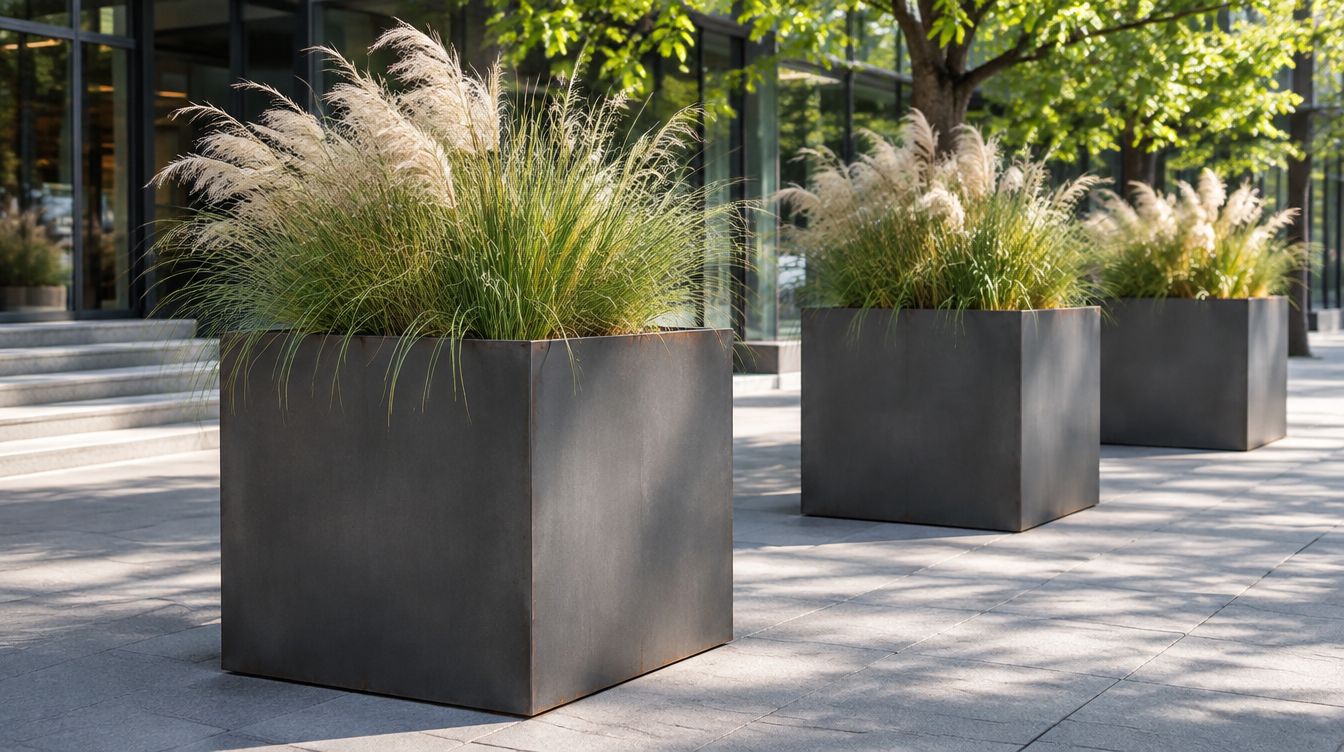
Steel planters suit streetscapes, plazas and rooftops because the walls are thin and strong. That leaves more room for soil than concrete or masonry of the same footprint, and steel can be cut and welded to almost any shape. But steel and wet soil are a demanding pair. The planter will hold moisture against metal for years, sit in salt spray and swing between summer heat and winter freeze. Good results come from the right size, finish, liner and drainage.
Pick a size for the plants, not just the space
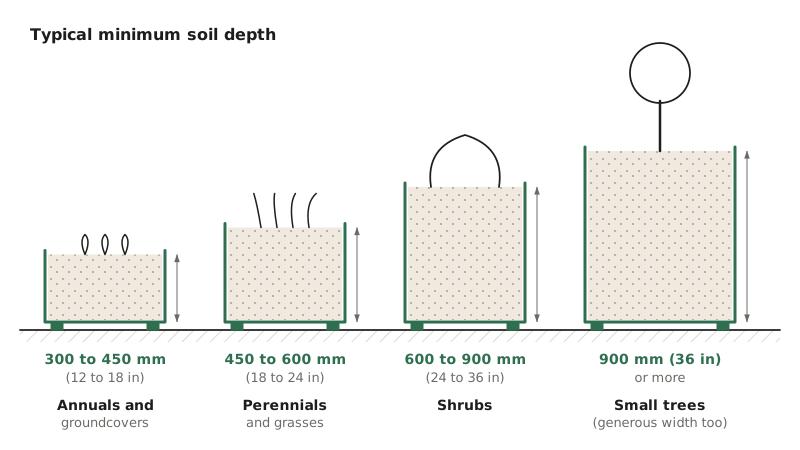
Plant health depends mostly on soil volume. Small planters dry out fast in summer and freeze through in winter. As a rough guide:
| Planting | Typical minimum soil depth |
|---|---|
| Annuals and groundcovers | 12 to 18 in (300 to 450 mm) |
| Perennials and grasses | 18 to 24 in (450 to 600 mm) |
| Shrubs | 24 to 36 in (600 to 900 mm) |
| Small trees | 36 in (900 mm) or more, with generous width |
Width matters as much as depth. A wider planter holds more water, buffers temperature swings and gives roots room to spread. For trees, talk to a landscape architect or arborist about soil volume early.
Plan for weight
A filled planter is far heavier than it looks. Moist planting soil can weigh well over 1,700 lb per cubic yard (about 1,000 kg per cubic meter), and saturated soil weighs more. A planter 4 ft (1.2 m) square and 24 in (600 mm) deep can hold close to a cubic meter of soil, which puts it well over 2,000 lb when wet.
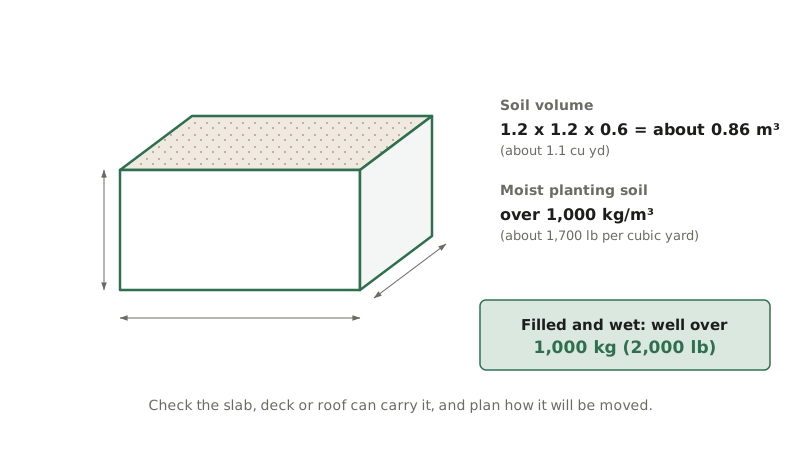
- On decks, rooftops and bridges, a structural engineer must confirm the structure can carry the load. Lightweight soil mixes and void fillers help.
- On paving at grade, check that the base can carry the concentrated load without settling or cracking.
- For moving later, add forklift pockets or lifting points. A full planter cannot be moved by hand.
Weight can also be useful. Heavy planters resist tipping and casual moving, which is why they are used to close streets and protect seating. See our guide to planters for traffic calming.
Finishes that last
The finish decides how long a steel planter looks good. The main choices are:
- Galvanized and powder coated. A zinc layer protects the steel, and a polyester powder coat adds color and a second barrier. This is the most durable choice for public spaces, especially where road salt is used.
- Powder coat over bare steel. Cheaper, but once the coating is chipped, rust can creep under it. Not recommended for salted streets.
- Weathering steel. Forms a stable rust-colored layer. It looks natural but stains paving with orange runoff, especially in the first years, and it does not suit constantly wet conditions or salt exposure.
- Stainless steel. Very durable and clean looking, at a much higher cost.
Dark colors absorb heat. A black planter in full sun can get hot enough to stress roots near the walls and to be uncomfortable to touch. Lighter colors or an insulating liner help.
Liners and insulation
A liner keeps wet soil off the steel and protects roots from heat and cold. Common approaches include:
- Rigid inner liner. A separate liner of plastic or galvanized steel holds the soil. It can be lifted out for replanting and protects the outer shell.
- Waterproof membrane. A membrane or coating on the inside walls stops moisture reaching the steel.
- Rigid insulation board. Panels of extruded foam against the inside walls reduce freezing and overheating.
Insulation matters in cold climates. Roots in containers are exposed to much colder temperatures than roots in the ground. A common rule is to choose plants rated about two zones hardier than your local zone. Use the USDA plant hardiness zone map, and remember that exposed planters on windy corners can be colder still.
Drainage
Every planter needs a way for excess water to leave. Without it, soil stays saturated, roots rot and, in winter, ice can push on the walls.
- Provide drain holes in the base, sized and spaced so they will not clog.
- Add a drainage layer or drainage mat with filter fabric so soil does not wash into it.
- Raise the planter on feet or a frame so water can escape and air can reach the base. This also stops the steel sitting in puddles.
- Think about where the water goes. Runoff can stain paving or freeze into ice patches on walkways.
For more detail on soil mixes and drainage layers, read Planter Drainage and Soil.
Mistakes to avoid
- Filling a planter with ordinary garden soil, which compacts and drains poorly. Use a planting mix suited to containers.
- Choosing a planter too small to keep plants alive through a hot summer or cold winter.
- Skipping the liner because the planter is "only for annuals". Moisture damages steel whatever is planted.
- Placing planters where water runs off onto a walkway and freezes.
- Forgetting irrigation. Large plantings in busy spaces usually need drip irrigation or a reliable watering schedule.
Our Square Planter and Linear Planter are galvanized and powder coated, and we build custom sizes and colors to fit your site.
Frequently asked questions
How thick should the steel be?
It depends on the size of the planter and how it is reinforced. Large planters need internal bracing or stiffeners so the walls do not bulge under soil pressure. Ask the maker for the wall thickness and how the walls are braced.
Can steel planters stay outside in winter?
Yes, if they drain well and have insulation or a liner. Choose hardy plants, and avoid salt spray where possible.
Do steel planters need maintenance?
Check drainage, clean the outside and touch up chips in the finish each season. Replace liners if they crack.