Receptacle Liners and Maintenance
The liner and the cleaning routine decide whether a receptacle looks good for years or turns into a smelly eyesore. Here is how to choose liners and bags, and what to clean, check and repair through the year.
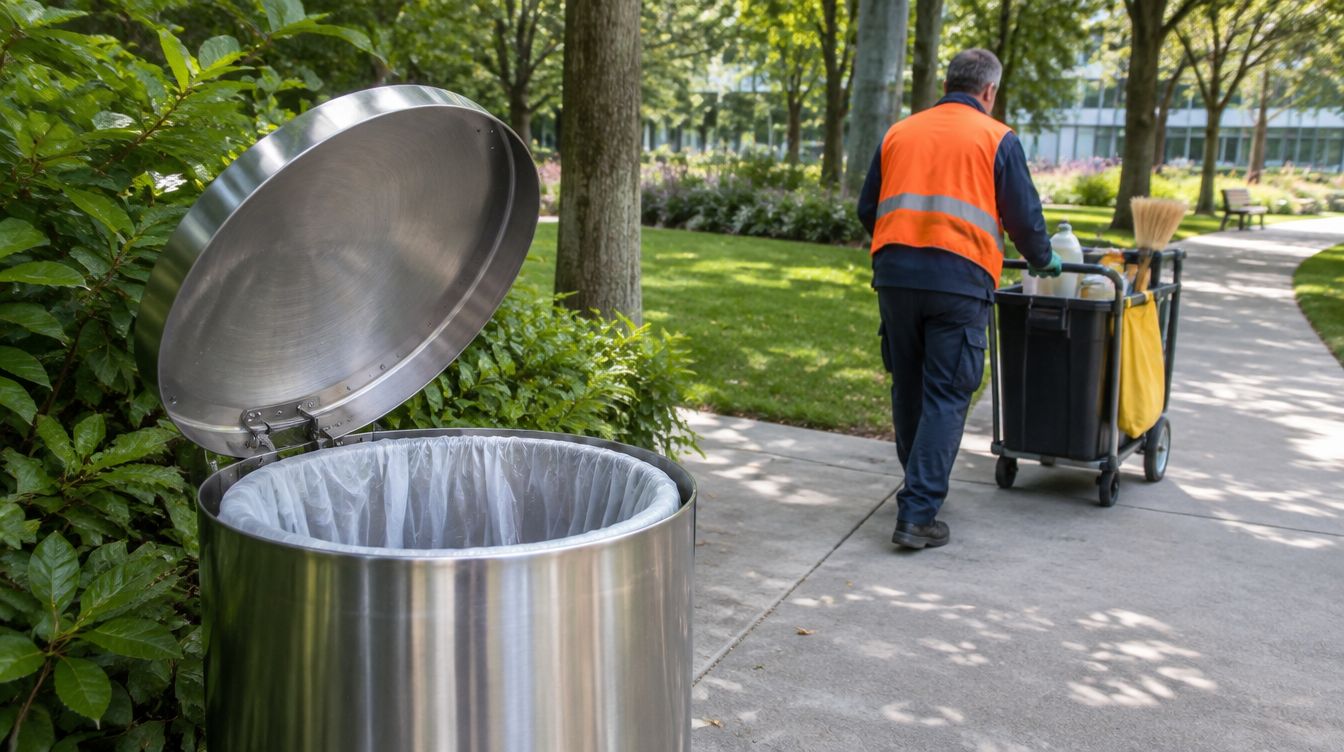
The outer shell of a receptacle gets the attention when it is bought, but the liner does most of the work. It holds the weight, takes the spills and gets dragged out and dropped back in hundreds of times a year. Pick the right liner, set a simple cleaning routine, and fix small problems early. That is how a receptacle stays in service for many years instead of a few.
Rigid liners versus bag-only frames
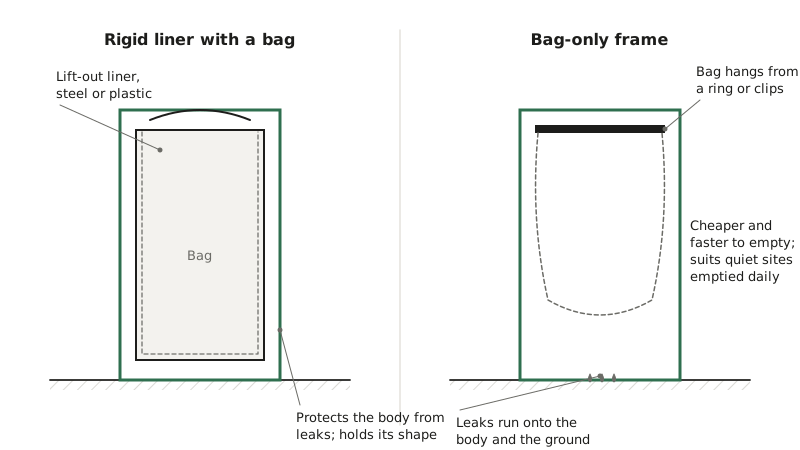
Most public receptacles use one of two systems. Each has a place.
- Rigid liner with a bag. A removable inner container, usually galvanized steel or heavy plastic, sits inside the outer body. A bag lines the inner container. Crews lift out the liner, or just the bag, to empty it. The rigid liner protects the outer body from leaks, holds its shape and keeps rodents away from the bag.
- Bag-only frame. A bag hangs from a ring or clips inside the body, with nothing else around it. It is cheaper and lighter, and emptying is fast. But leaks run straight onto the body and the ground, and sharp items tear the bag more easily.
For busy public spaces, a rigid liner is usually worth the extra cost. A bag-only setup suits low-traffic sites, or places where staff empty bins daily.
Choosing liner materials
| Liner | Strengths | Limits |
|---|---|---|
| Galvanized steel | Strong, fire resistant, hard to chew, long life | Heavier to lift, can dent if dropped |
| Plastic (polyethylene) | Light, quiet, will not rust | Can melt from hot ash, chewable, can crack in deep cold |
| Stainless steel | Very durable, easy to clean | Highest cost |
If people might drop cigarette butts or hot coals into the bin, choose a metal liner. Plastic liners can melt or catch fire. Where rodents are a problem, metal also resists chewing far better.
Check that the liner has handles crews can grip with gloves, and that its weight when full is something one person can lift safely. A smaller liner emptied more often is better than a large one that strains backs.
Picking the right bags
The bag should fit the liner. A bag that is too small slips off and falls in. A bag that is too big bunches up, wastes plastic and leaves loose material for wind and animals to grab. Measure the liner's capacity and order bags rated for that size. In the USA, liner capacities are usually listed in gallons and bag thickness in mils. A 32 gal (121 L) liner is a common size for public receptacles.
- Use thicker bags where people dispose of food, cups with liquid or sharp items.
- Use clear bags for recycling streams so crews can spot contamination before it goes in the truck.
- Consider bag colors that match each stream at a multi-stream station.
- Check local rules. Some jurisdictions restrict certain bag types for organics or require compostable bags.
A practical cleaning routine
Cleaning frequency depends on traffic and season. Food courts and beaches in summer may need weekly washing. Quiet paths may need it a few times a year. Use this as a starting point:
- At each pickup: remove the bag, check for leaks or loose waste in the liner, wipe off obvious spills on the lid and opening, and pick up litter around the base.
- Monthly in busy months: remove the liner and rinse it. Wash the inside of the outer body and the underside of the lid, where sticky residue builds up. Use a mild detergent and water.
- Seasonally: pressure wash the exterior at moderate pressure, keeping the nozzle back from the surface to avoid damaging the coating. Check for graffiti, stickers and gum.
- As needed: remove wasp nests early in the season, clear drain holes and wash away bird droppings, which can stain finishes if left for weeks.
Avoid harsh solvents and abrasive pads on powder-coated surfaces. They dull the finish and can strip it. On stainless steel, avoid bleach and chloride cleaners, which can cause spotting. Rinse well after any cleaner.
Inspection and repairs
Most receptacle failures start small. A loose bolt becomes a rattling lid, then a missing lid. A small chip in the coating becomes a rust streak. A quick check each season catches these early.
- Anchors: make sure the bin is still firmly fixed to the pad and does not rock.
- Lids, doors and hinges: check that they open and close smoothly. Lubricate hinges and replace worn springs or latches.
- Fasteners: tighten anything loose and replace missing tamper-resistant fasteners with the same type.
- Coating: clean and touch up chips with the matching touch-up paint before rust spreads. Ask your supplier for the color code.
- Liners: replace liners that are cracked, badly dented or rusted through. A damaged liner tears bags and leaks.
- Signage and decals: replace faded or peeled recycling labels so sorting stays clear.
Keep a few spare liners on hand. Swapping a dirty liner for a clean one and washing the dirty one at the yard is faster than cleaning on site.
Winter care
Cold weather brings its own problems. Wet waste can freeze to the liner and make emptying difficult, and lids can freeze shut. In northern states and mountain areas, a few habits help:
- Empty bins before a hard freeze when you can, so wet waste does not freeze solid.
- Keep drain holes clear so meltwater does not collect and freeze in the bottom.
- Knock off ice and snow buildup on lids and hinges rather than forcing them open.
- Rinse off road salt spray in spring. Salt left on the finish all season speeds up corrosion at any chip.
Our receptacles, including the Slat Receptacle, use a galvanized and powder-coated body with a removable liner, so they can be cleaned and touched up in place. We also supply replacement liners.
Frequently asked questions
How often should liners be replaced?
There is no fixed schedule. A metal liner that is handled with care can last many years. Replace it when it is cracked, rusted through, or dented enough that bags tear or the liner no longer sits properly.
Why do our bins smell even when they are emptied often?
Liquid leaks under the bag and collects in the bottom of the liner or the body. Rinse the liner and body regularly, keep drain holes clear and use thicker bags where people throw away drinks.
Can we use the same bags for waste and recycling?
You can, but clear bags for recycling make contamination easy to see, and different colors help crews keep streams separate. Check what your hauler or municipal program asks for.